
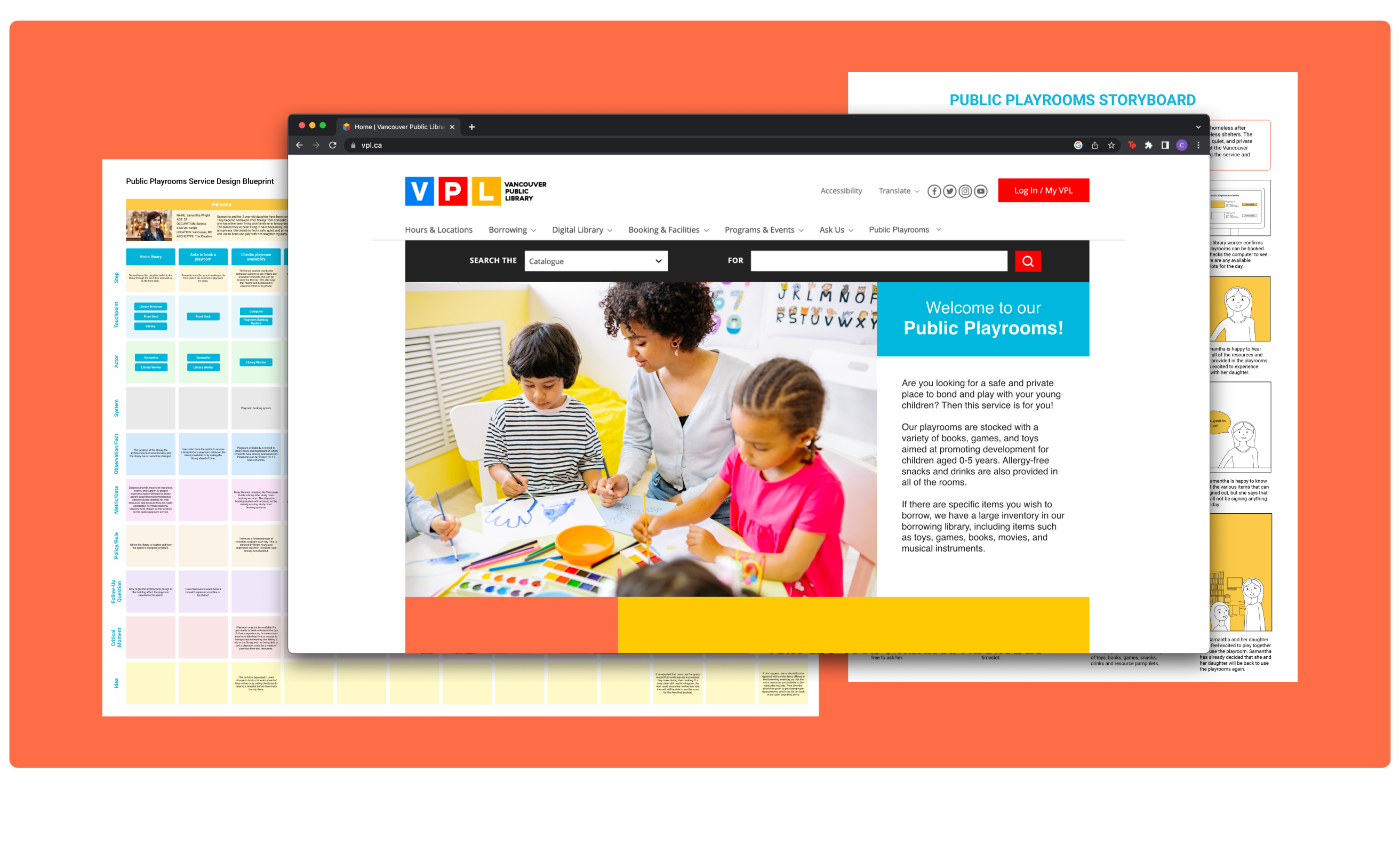
Caring attachments between adults and children are fundamental to human development.
Homeless episodes involving mothers and their young children are typically part of a long period of residential instability. This instability can affect the mother and child's attachment and their mental and physical wellbeing.
Mothers with young children experiencing homelessness often lack control over their environment, consistency, privacy, and safety, all while often dealing with immense stress and personal trauma. They also often face barriers accessing resources and services.
A public playroom service that is easily accessible, safe, and private, designed for the needs of mothers with young children experiencing homelessness.
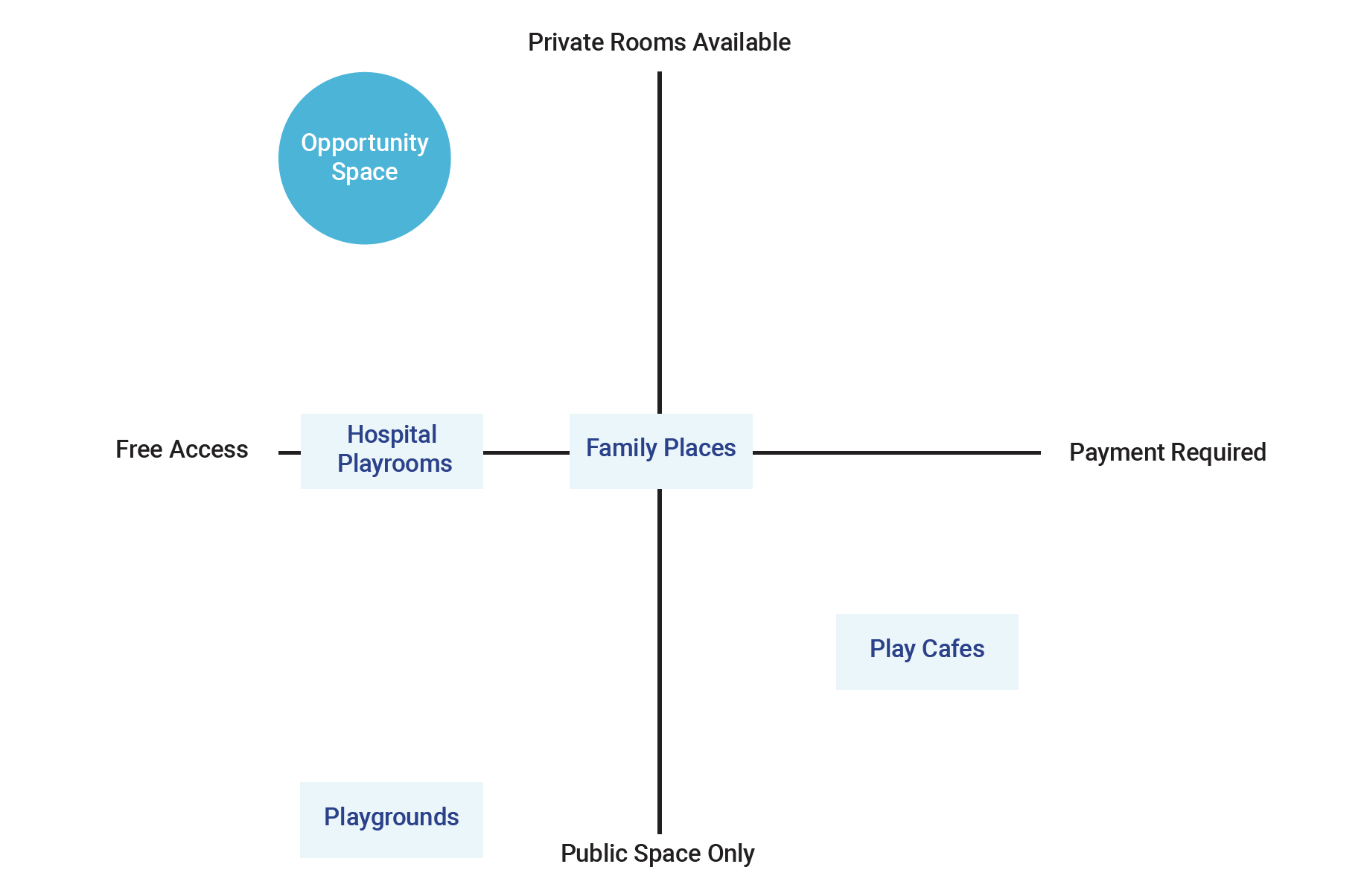
There is a gap in play space services, as there are none or very few options that offer free access as well as private rooms in Vancouver.
Based on the insights from my primary and secondary research, these are the reasons why public playrooms are needed and would benefit mothers with young children experiencing homelessness:
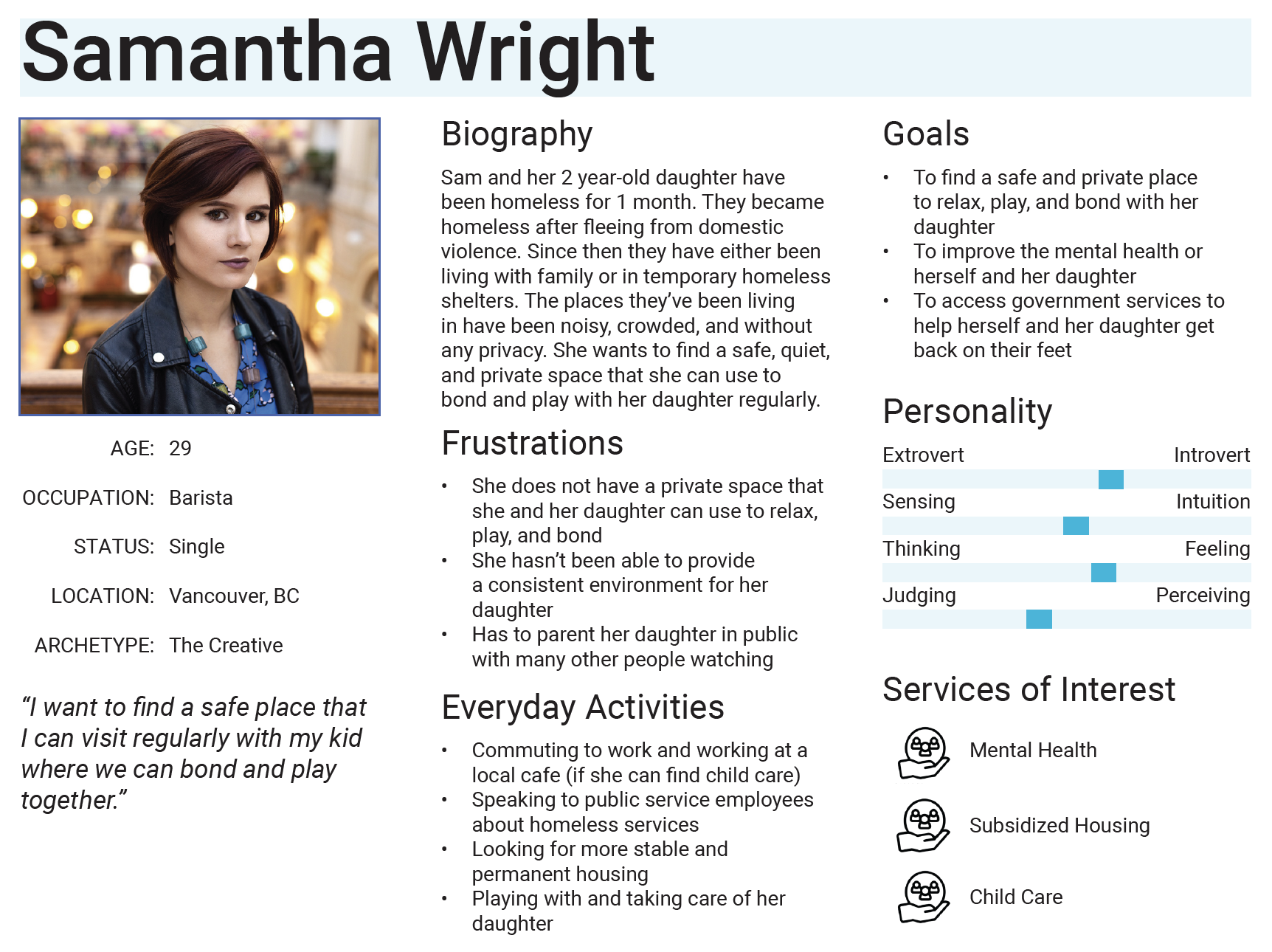
While I designed this service with mothers and their young children experiencing homelessness as the target users, I want this service to be available for everyone.
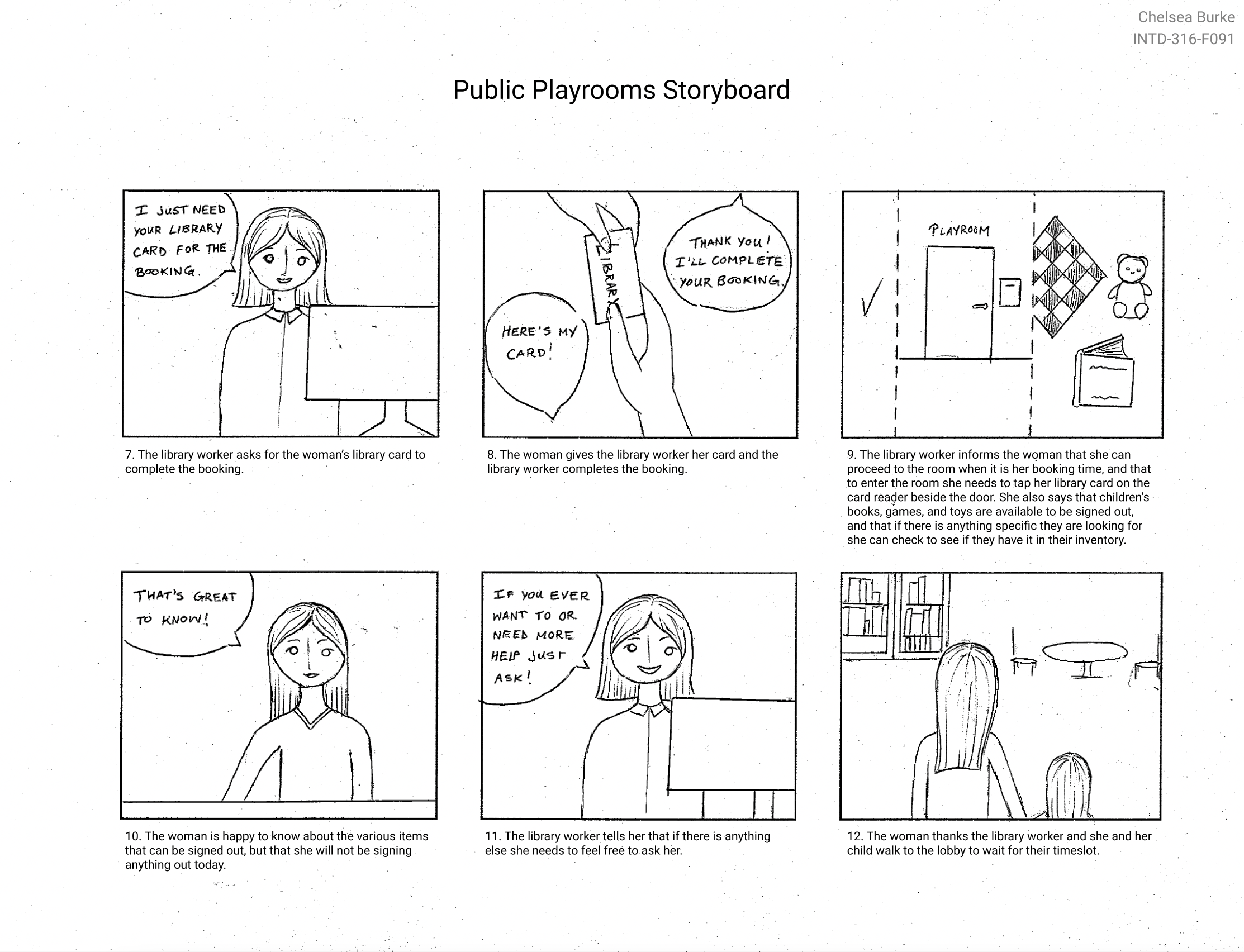
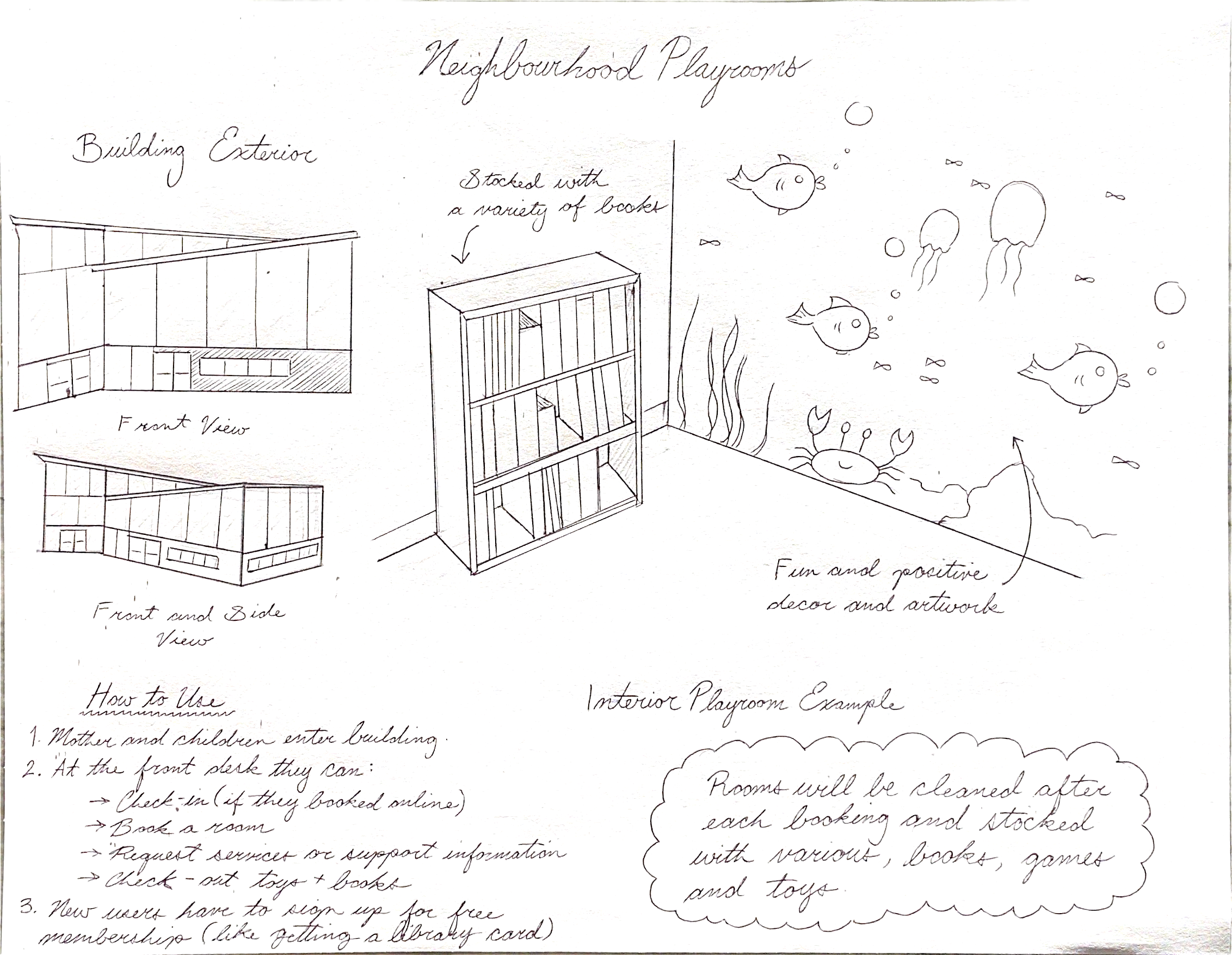
The service will be much like booking a study room at a library, and will be available in local libraries with existing rental rooms.
Users will sign up for a free library card (if they don’t already have one), which they will use to access playrooms, book rooms online, and access other services and support.
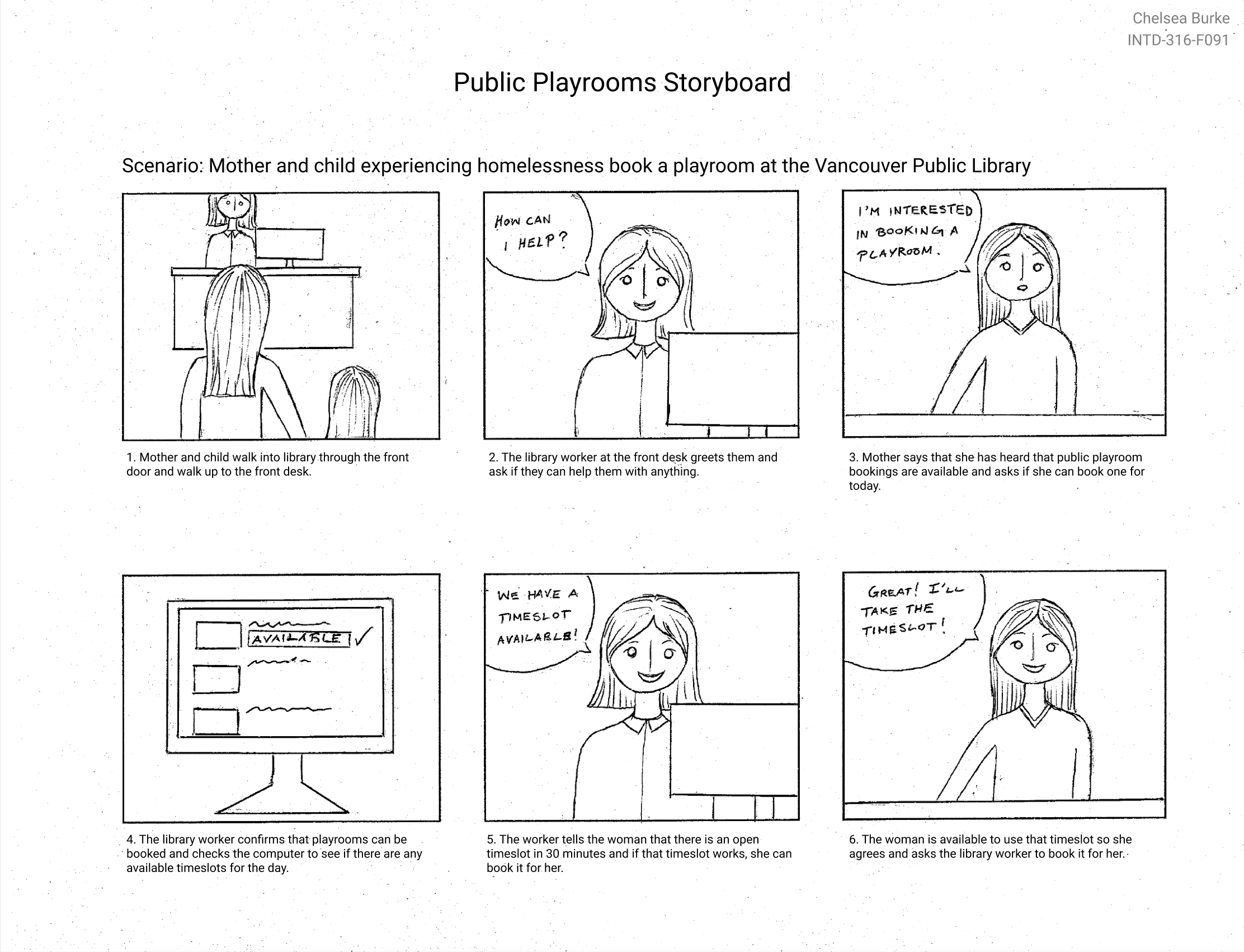
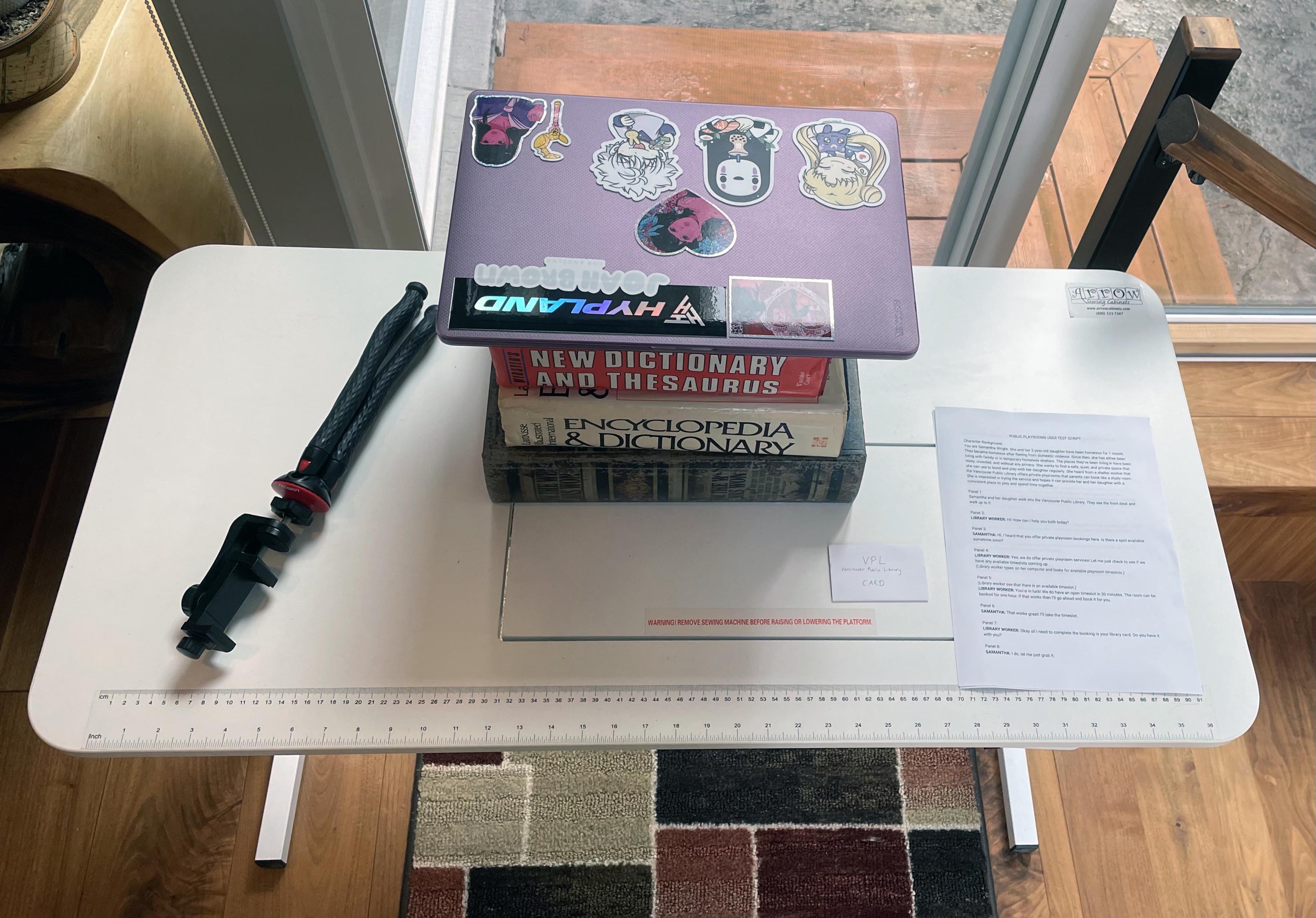
Participants were asked to act out the storyboard with me and then answer follow-up questions about their experience.
As we acted out the storyboard, I filmed the interaction, which was later analyzed to determine how to improve the next iteration of the storyboard prototype.
The materials and props used can be seen below.
I showed two users a version of the flats with the classic Vancouver Public Library (VPL) colour scheme (Colour Scheme A) and a version with lighter colour scheme (Colour Scheme B). Both users preferred Colour Scheme B over Colour Scheme A.

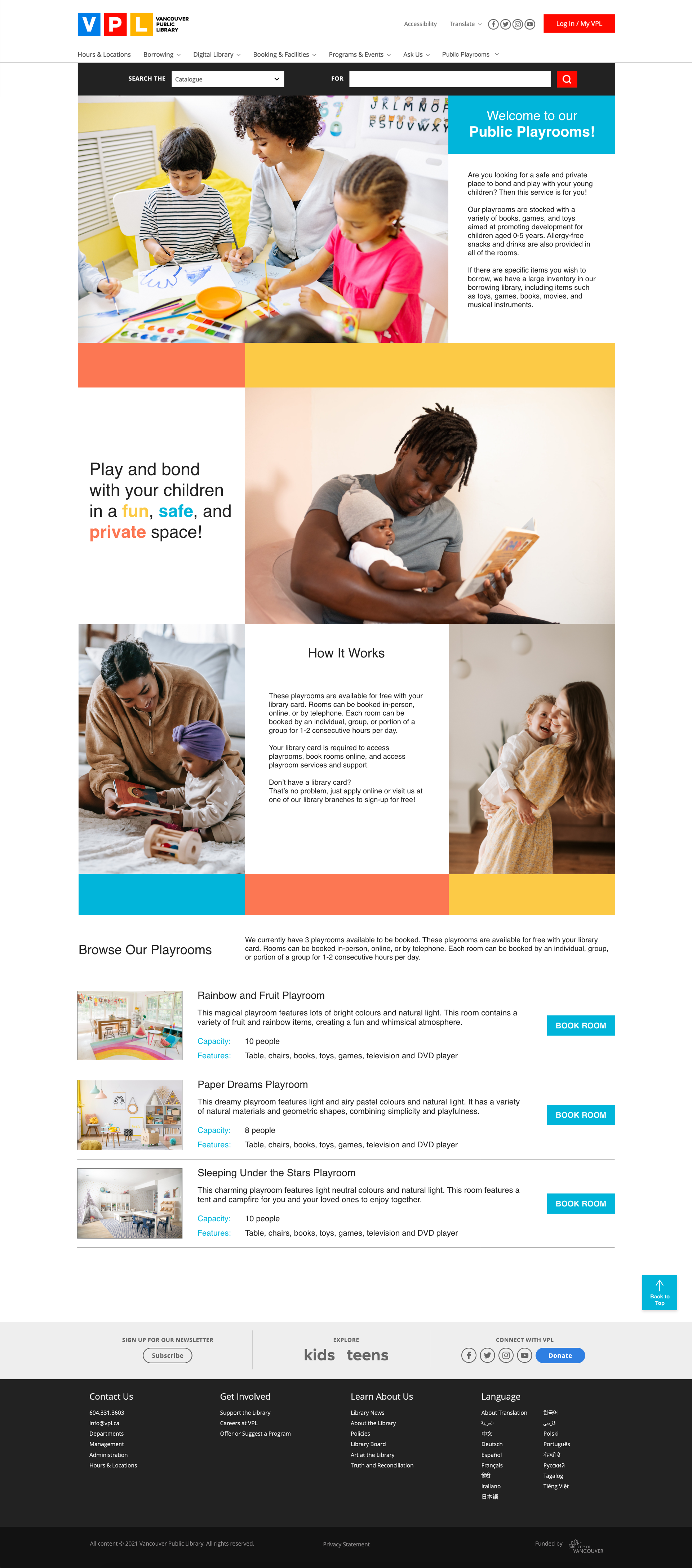
The service provides:
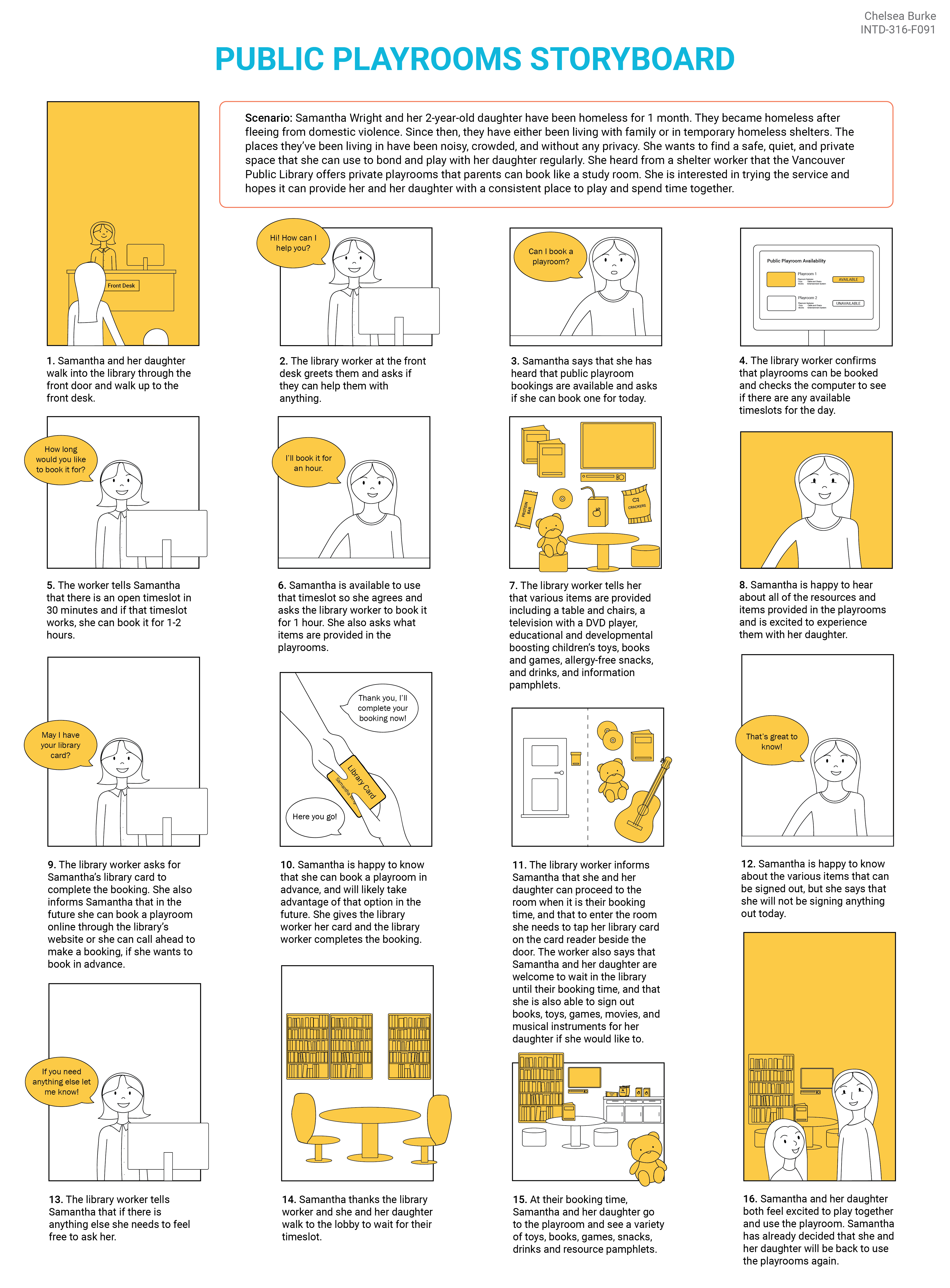
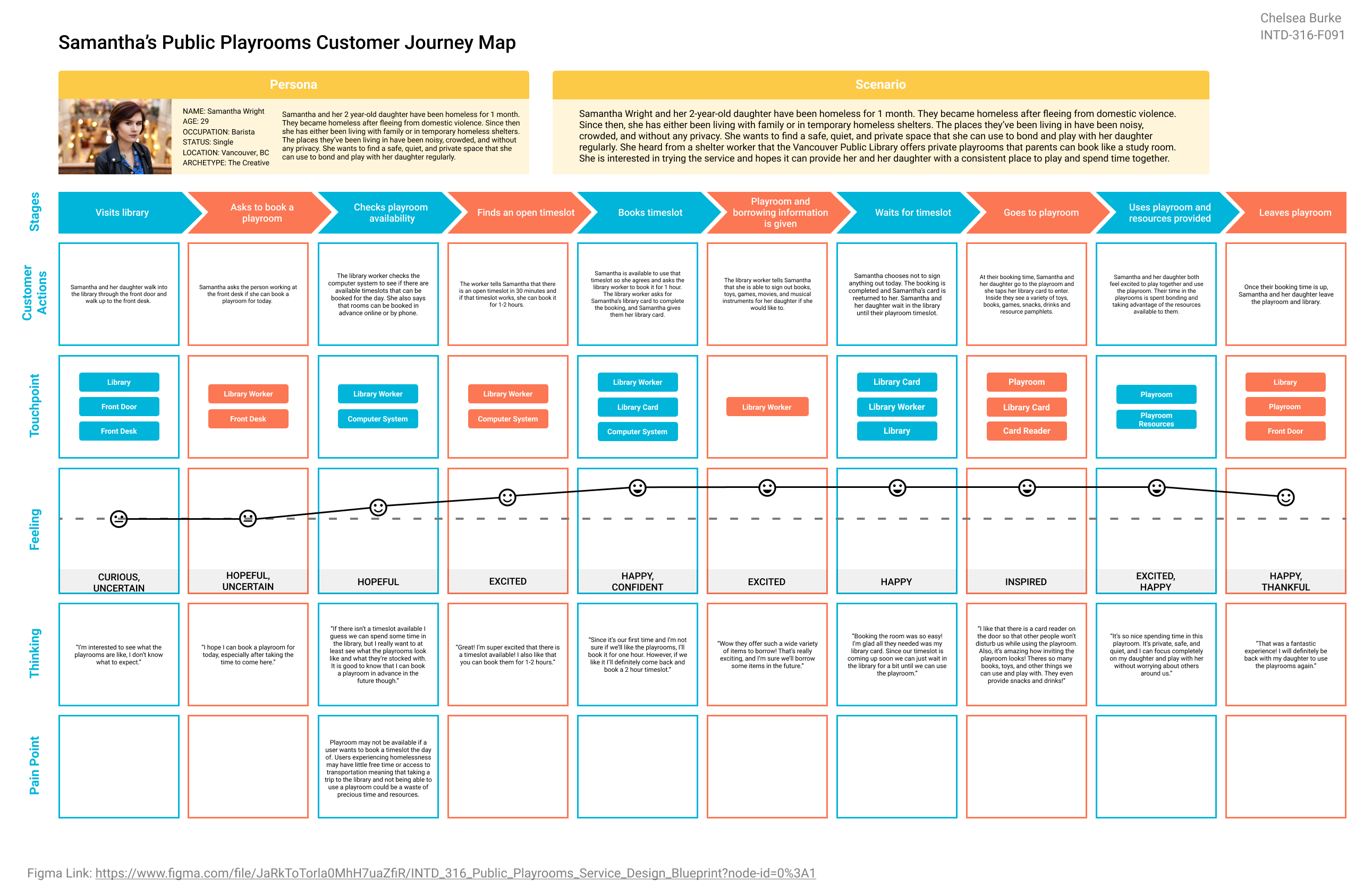
Pain point: If a user is booking a playroom in-person the day of their visit, there may not be any available time slots, which could be a waste of time and resources.
This journey map shows Samantha booking a playroom in-person, however users do have the option to book online or by phone in advance. If they book in advance then users can guarantee that they will be able to use a playroom during their library visit.
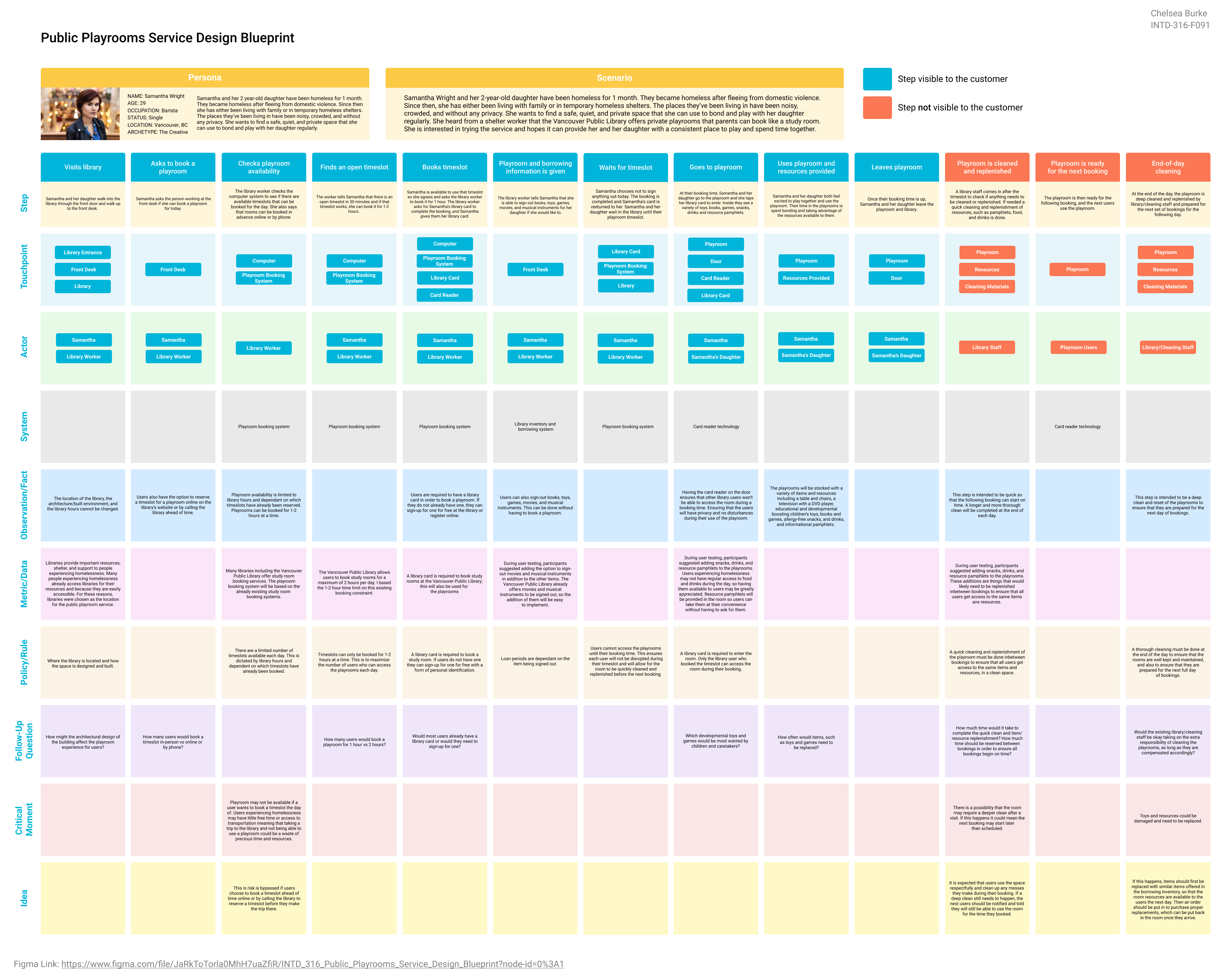
The steps coloured in blue are those visible to the customer and those coloured in orange are not visible to the customer.
There are three critical moments:
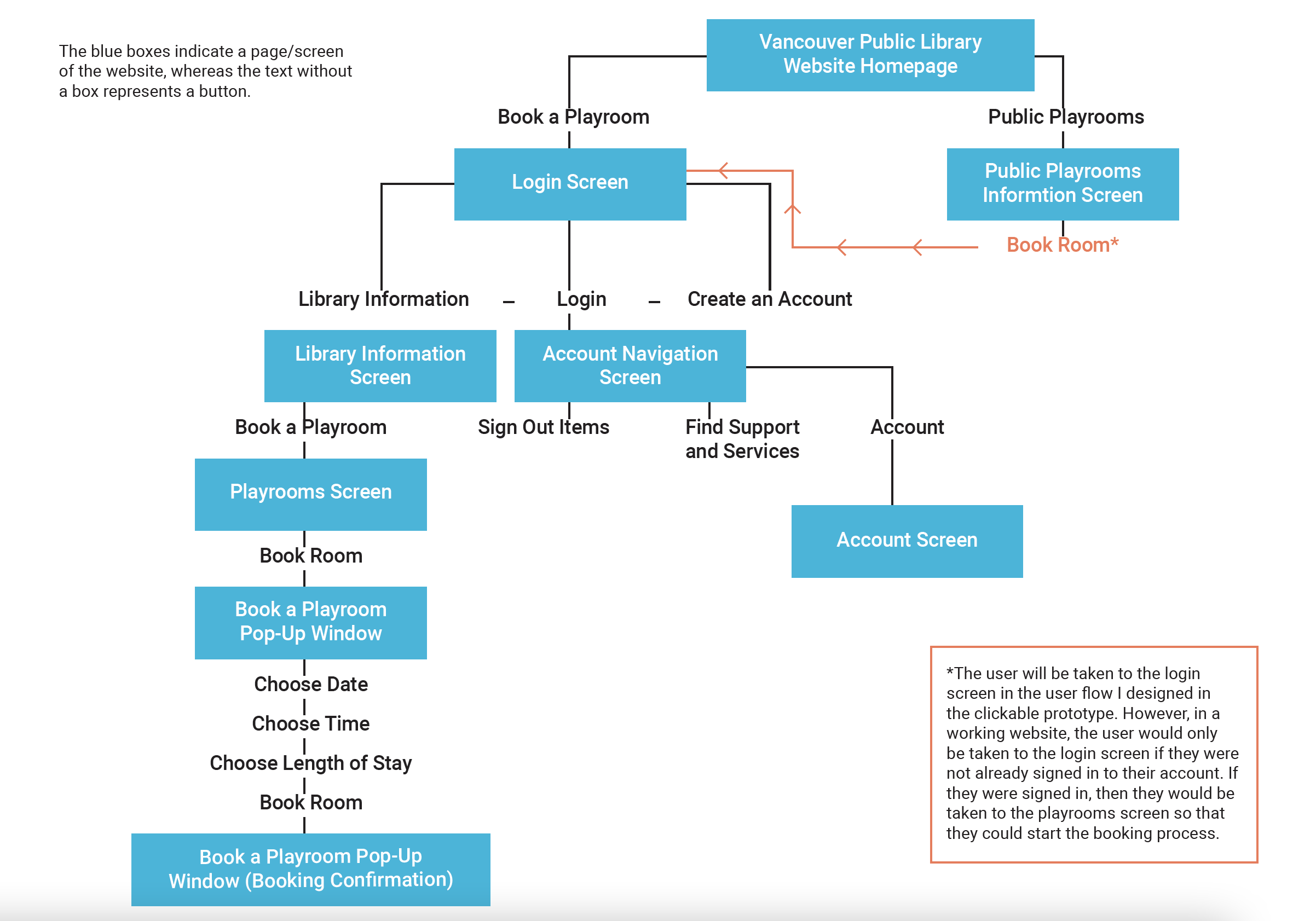
The main user flow I designed for was a user finding information about the public playrooms service and booking a playroom.
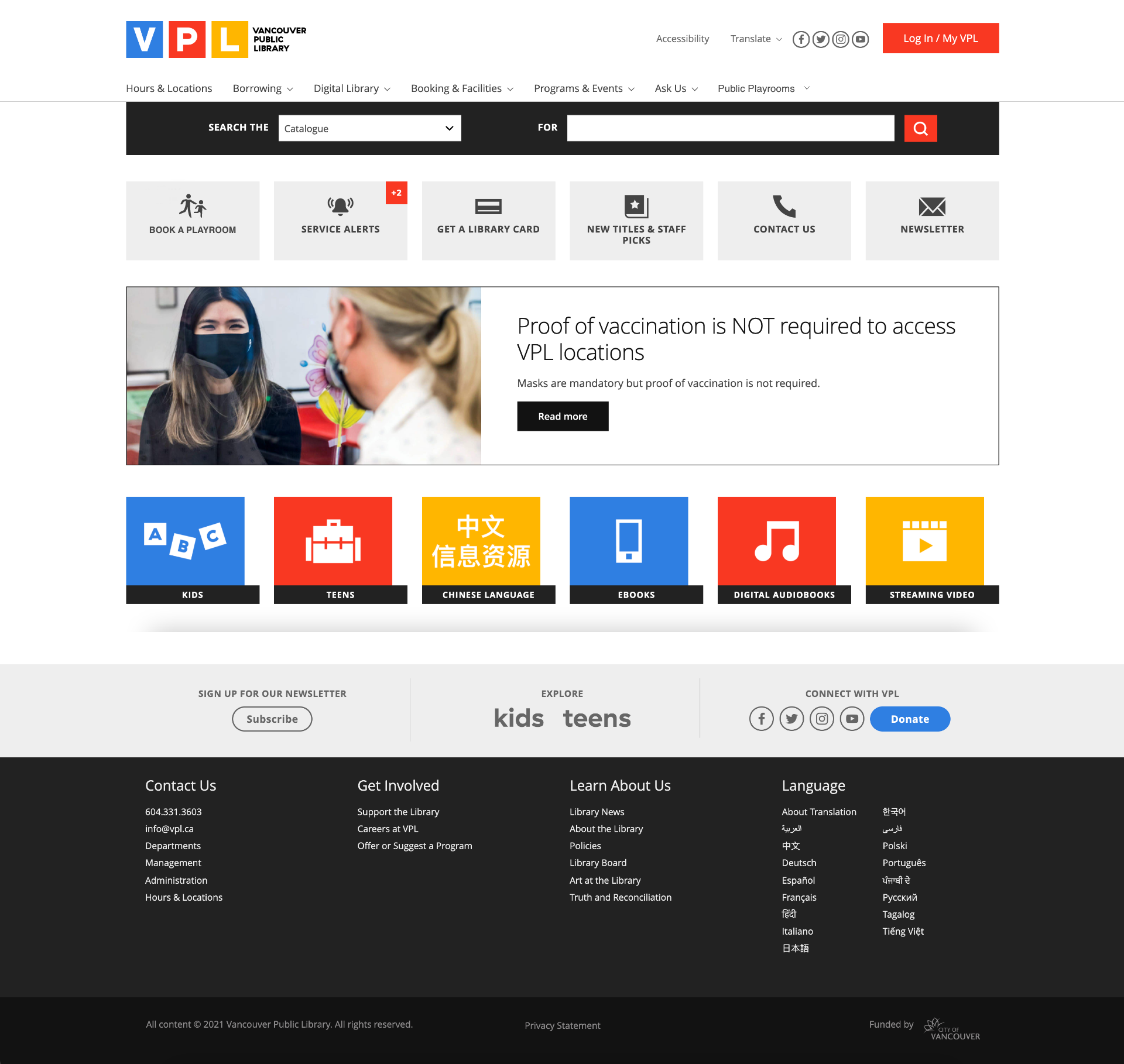
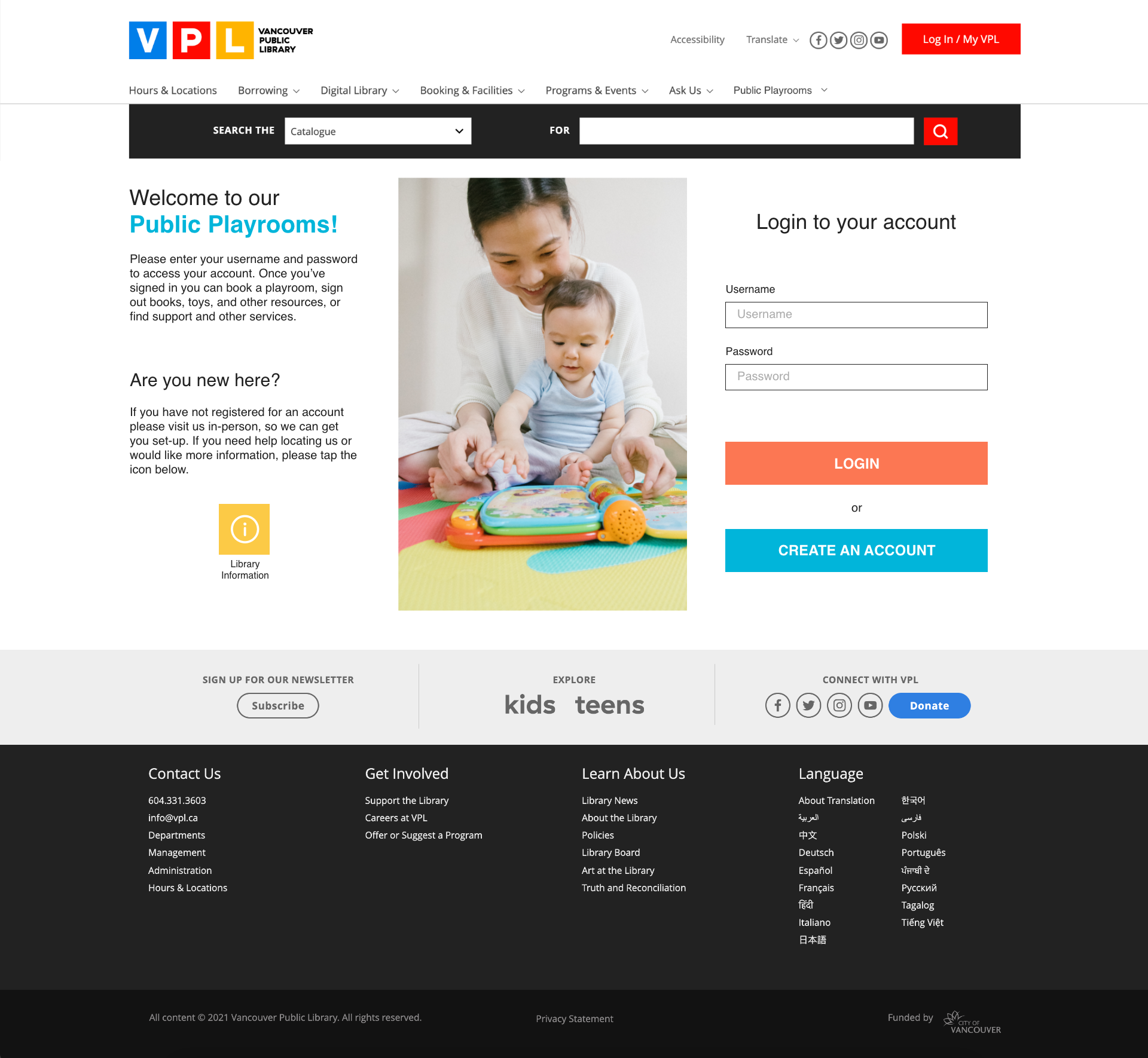
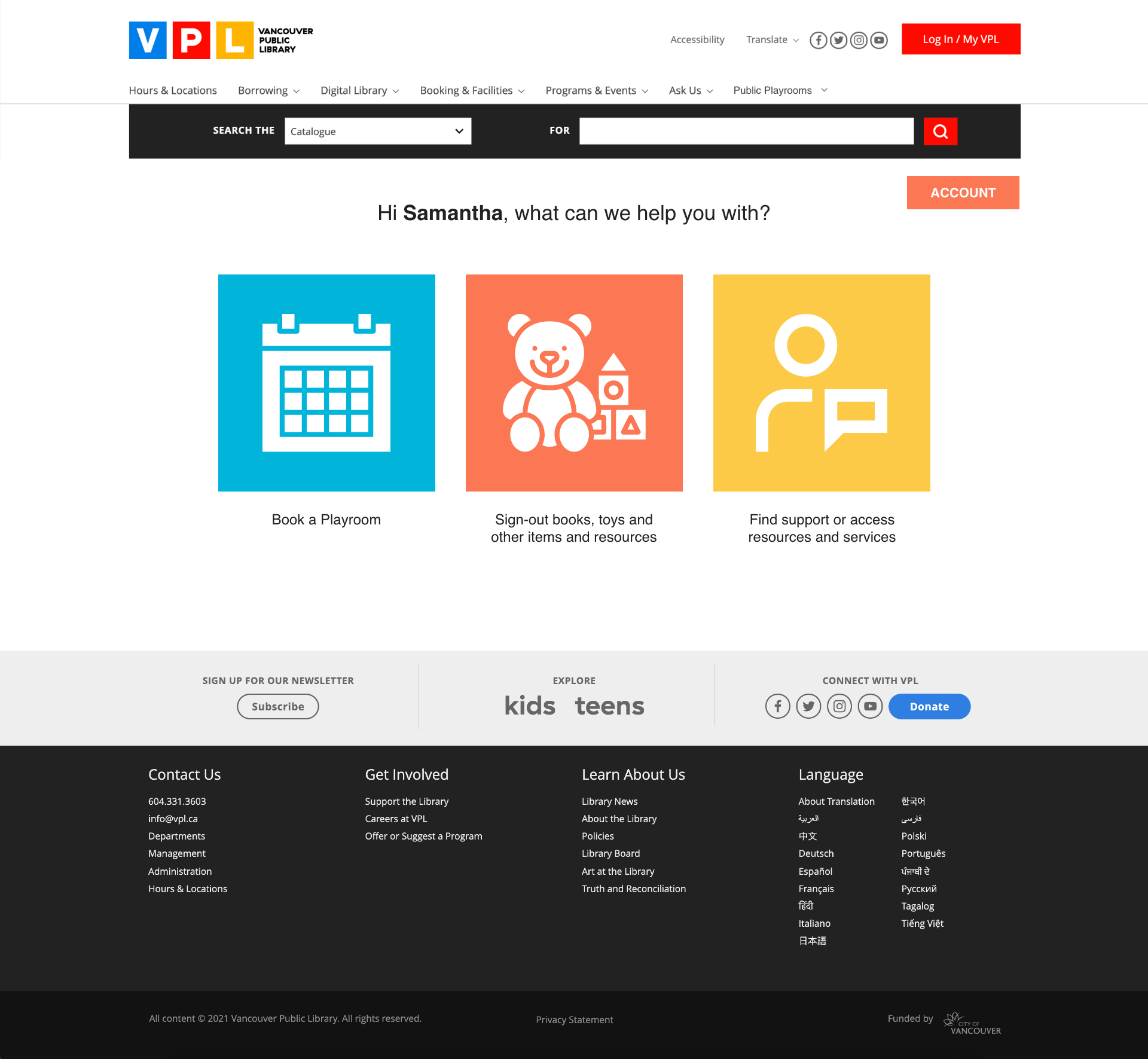
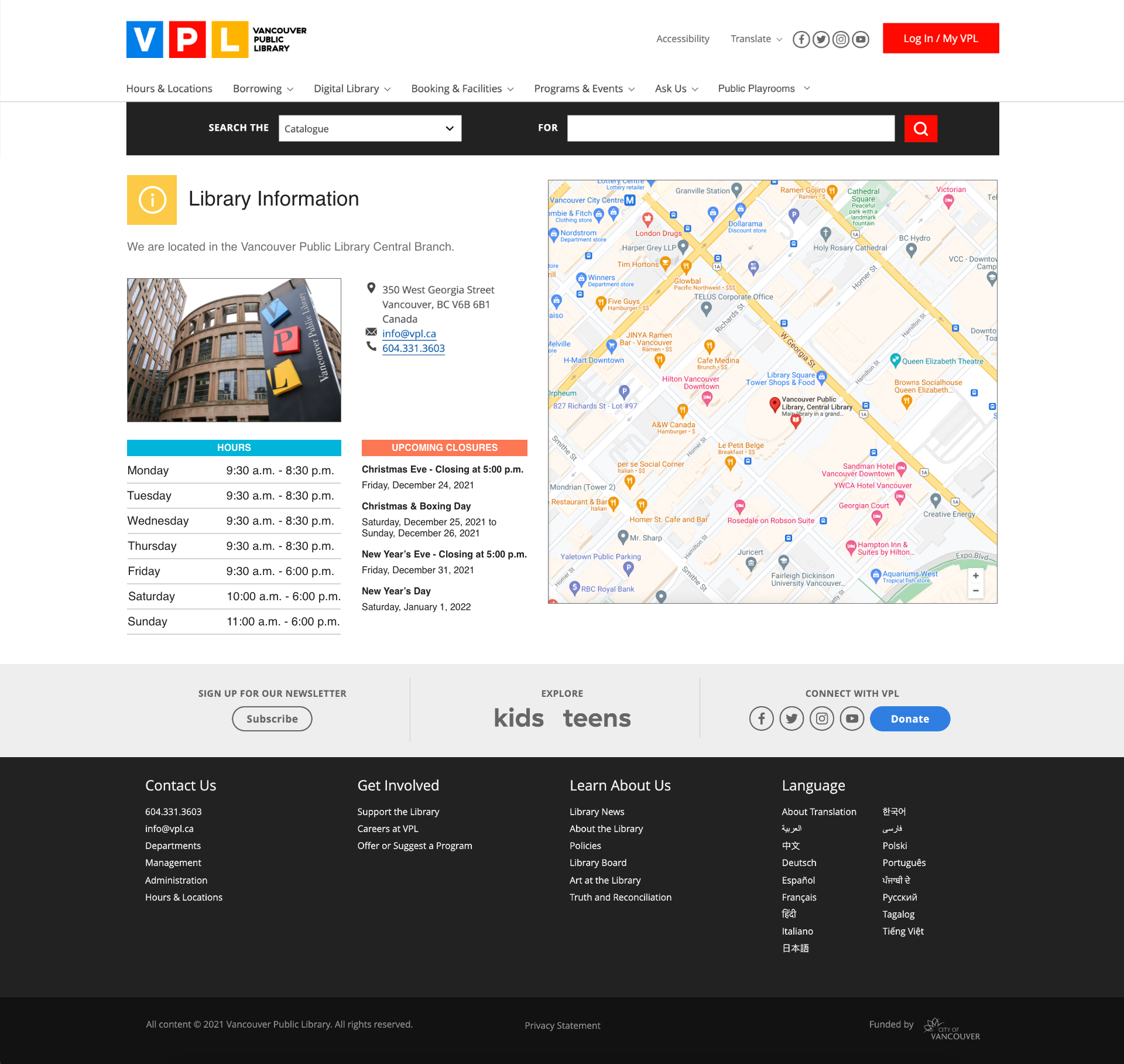
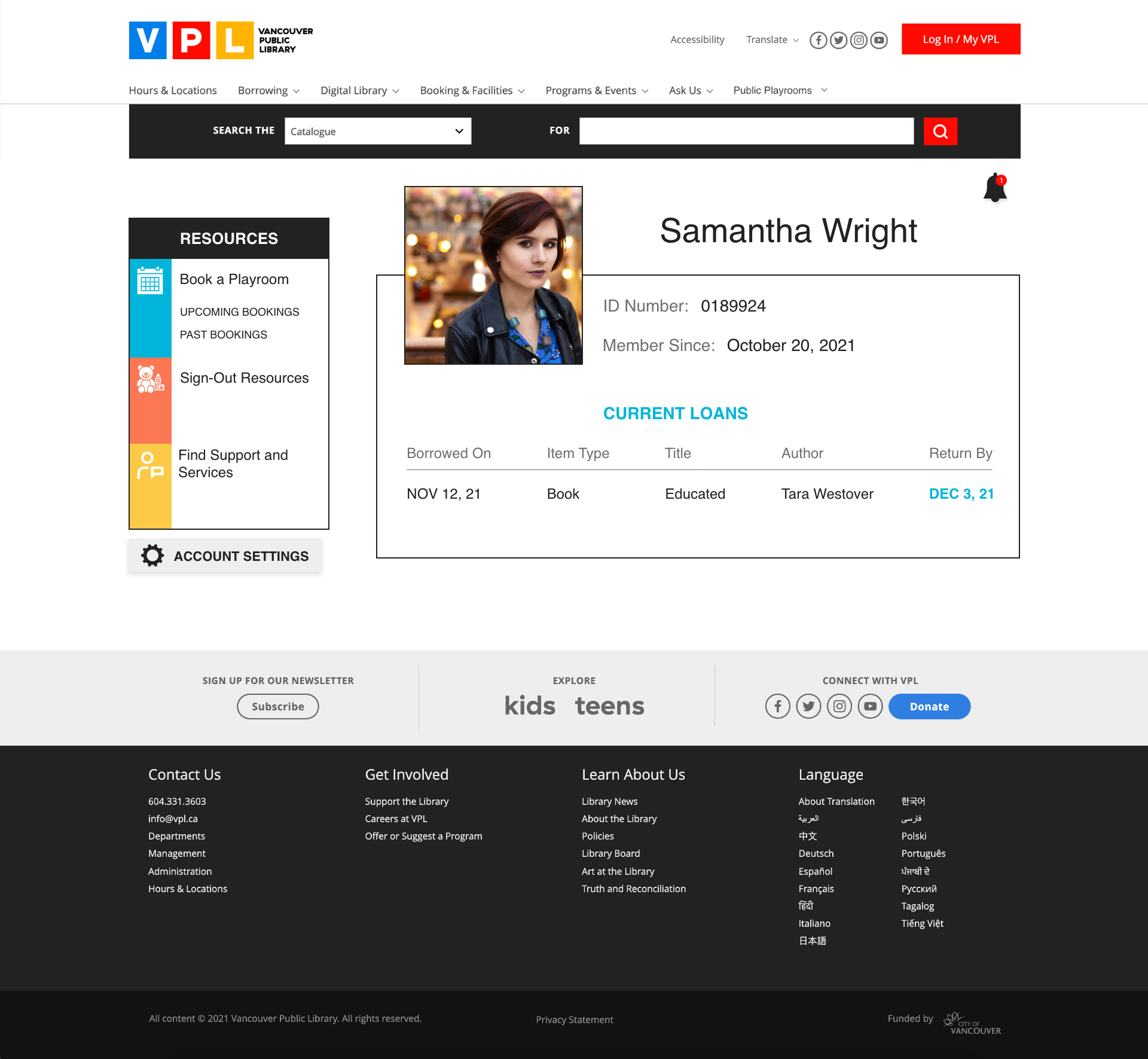
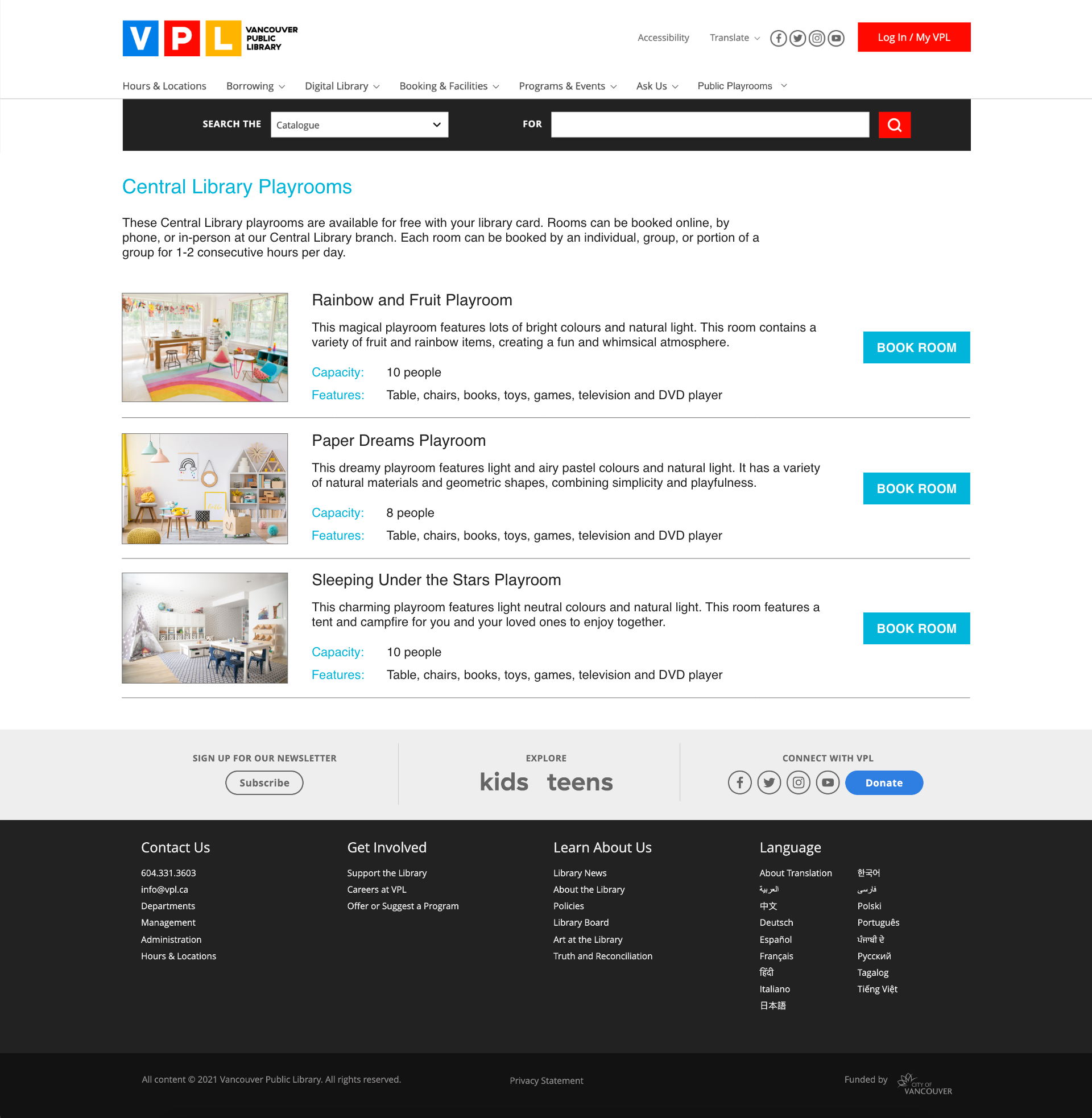
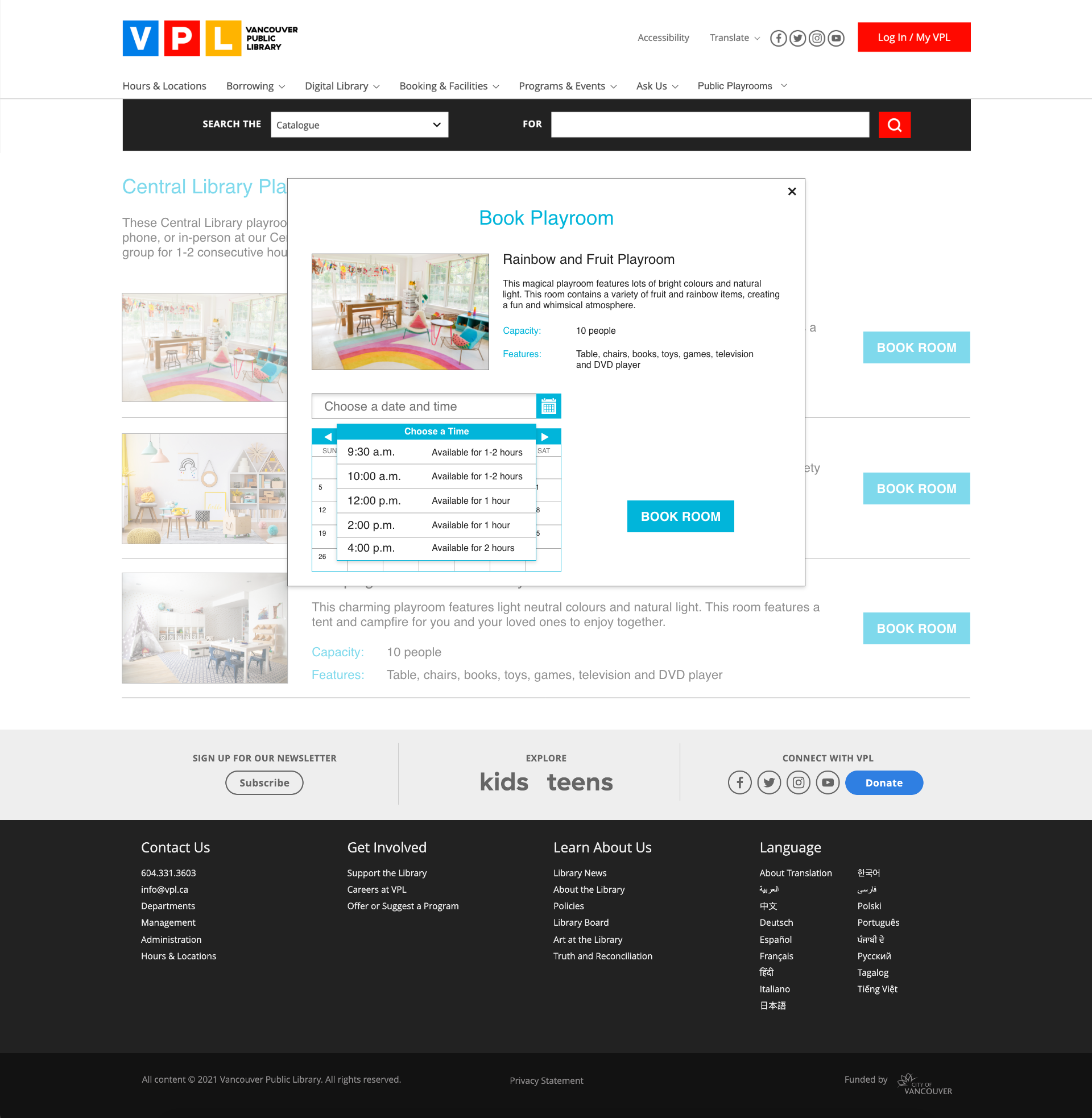
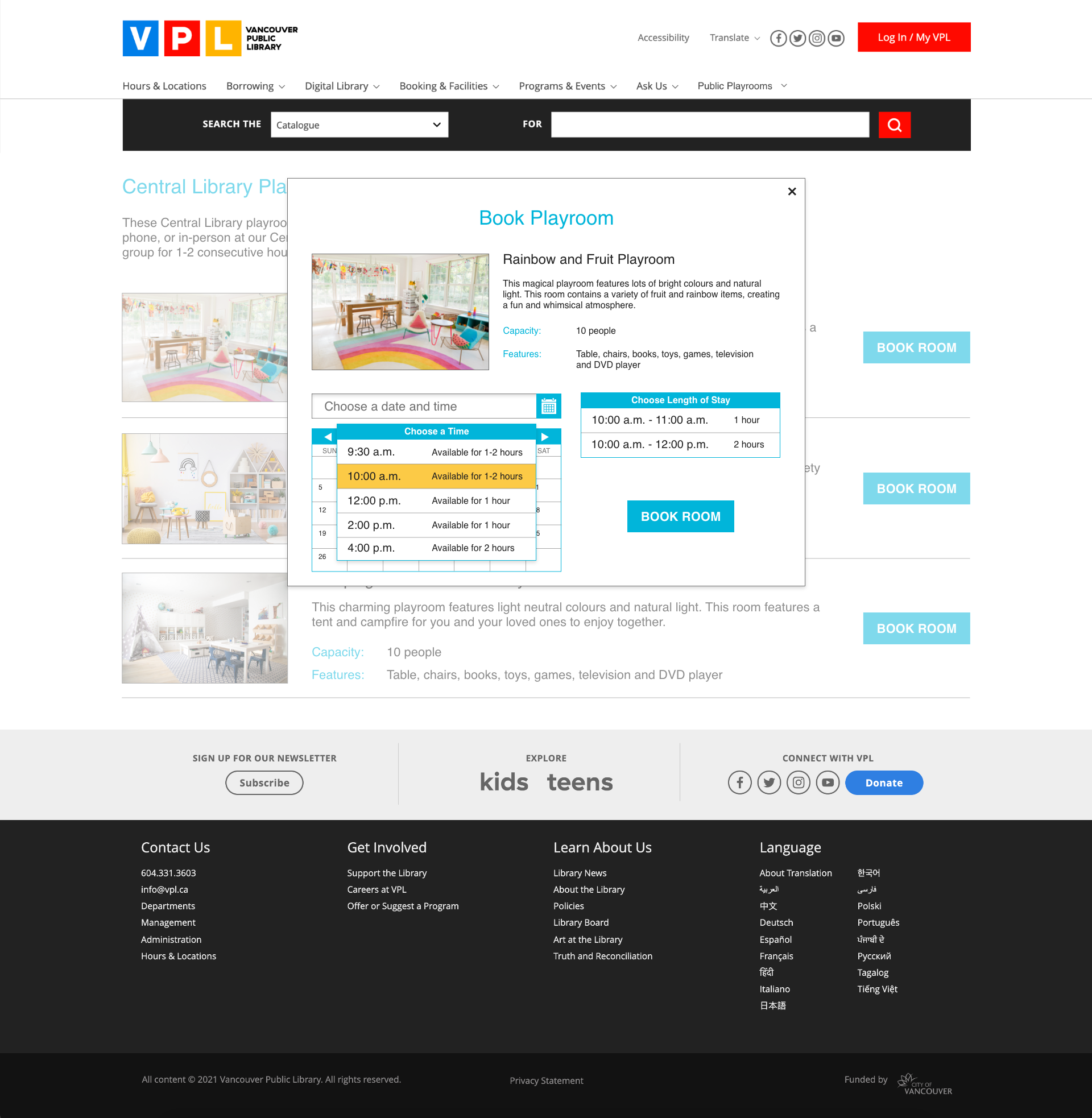
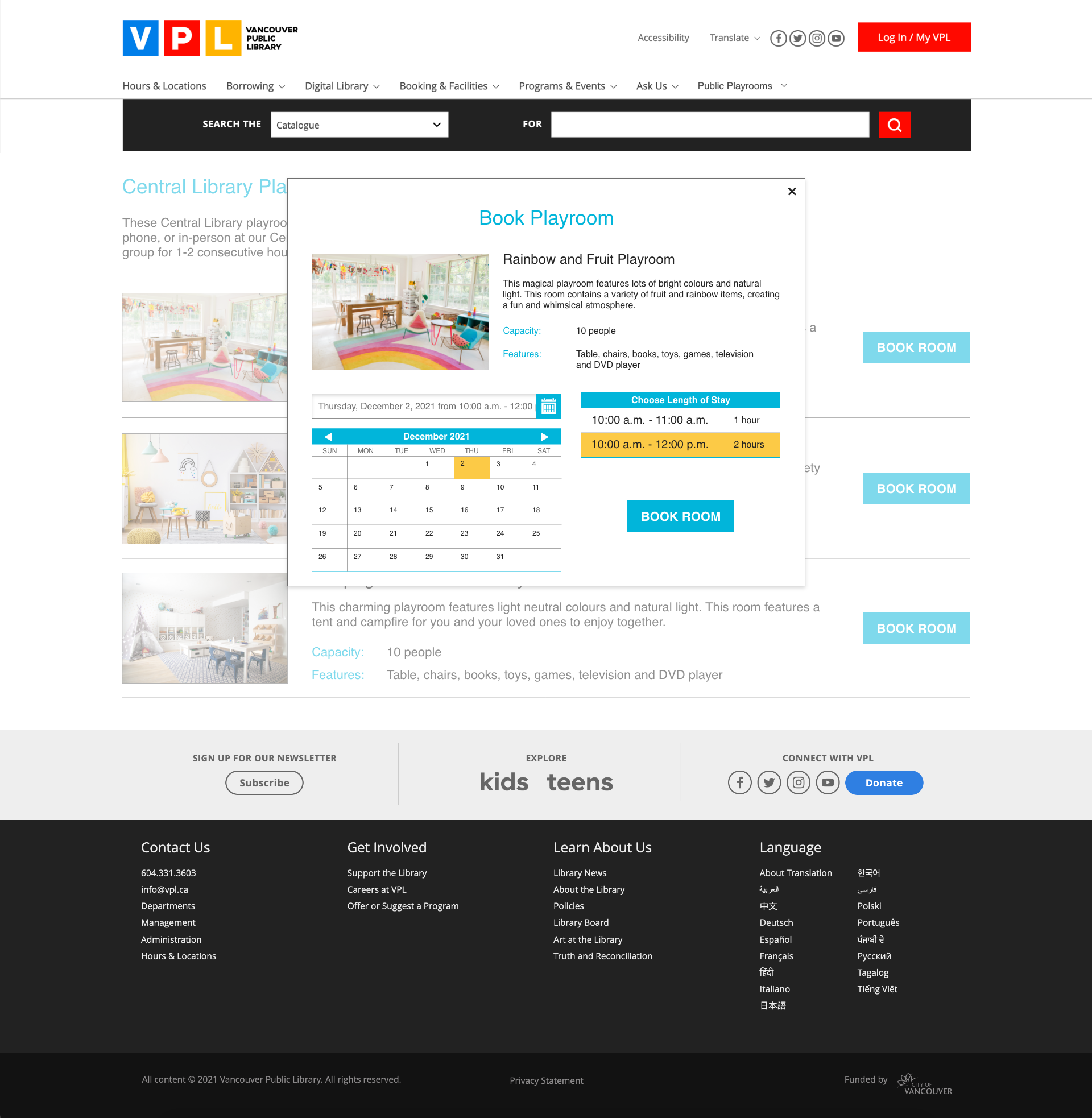
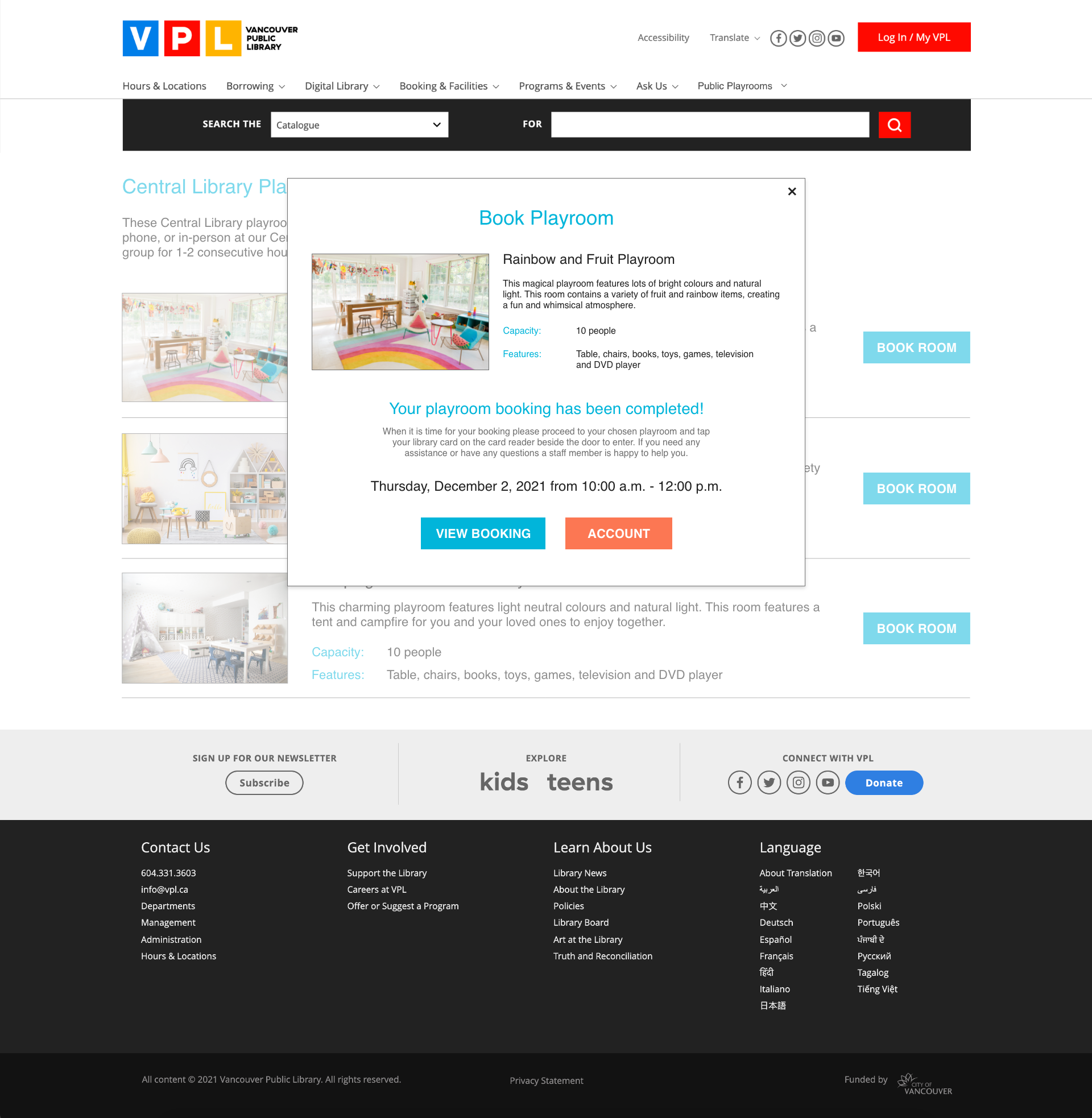
These are the screens someone would see when booking a playroom.
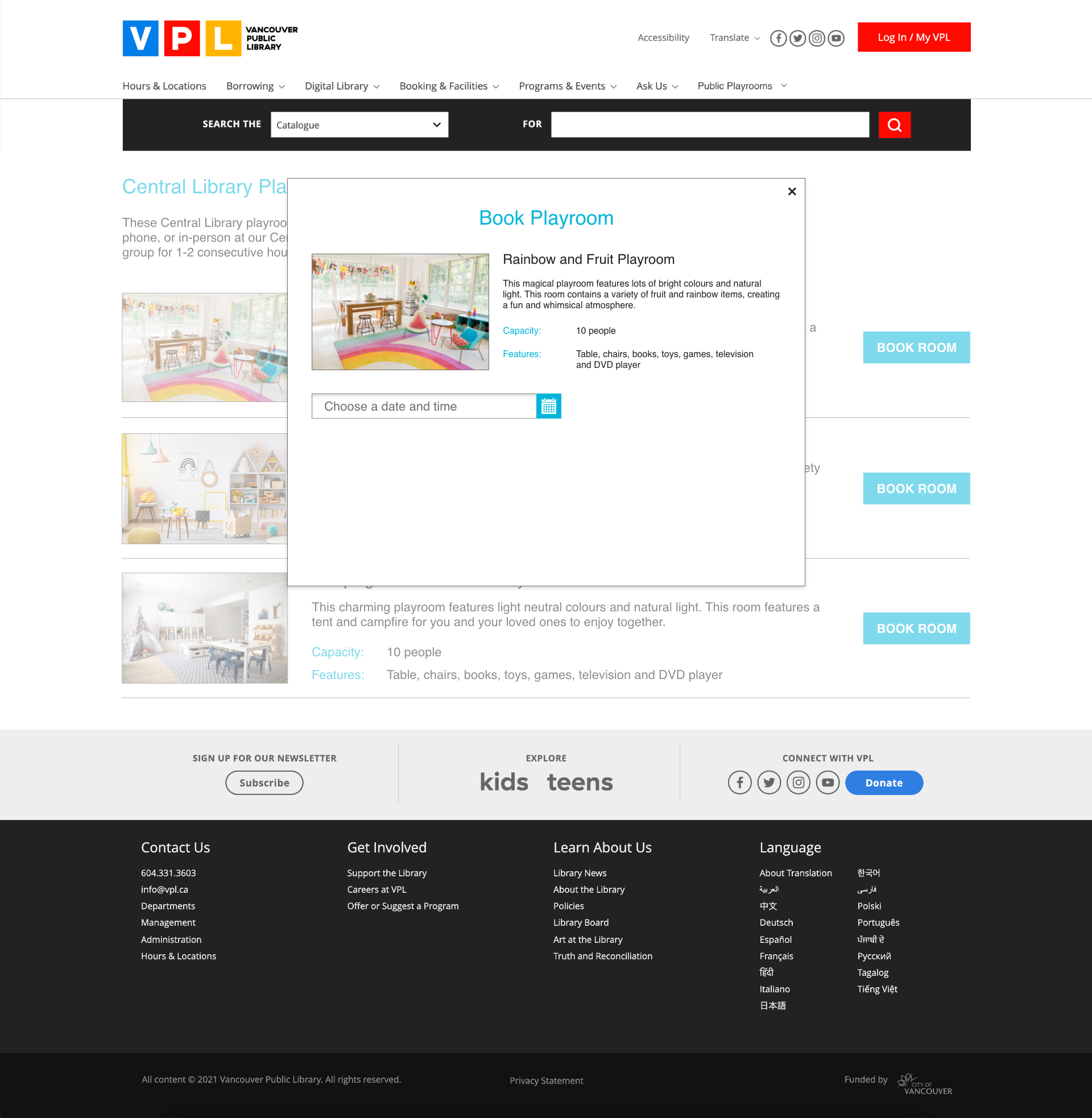
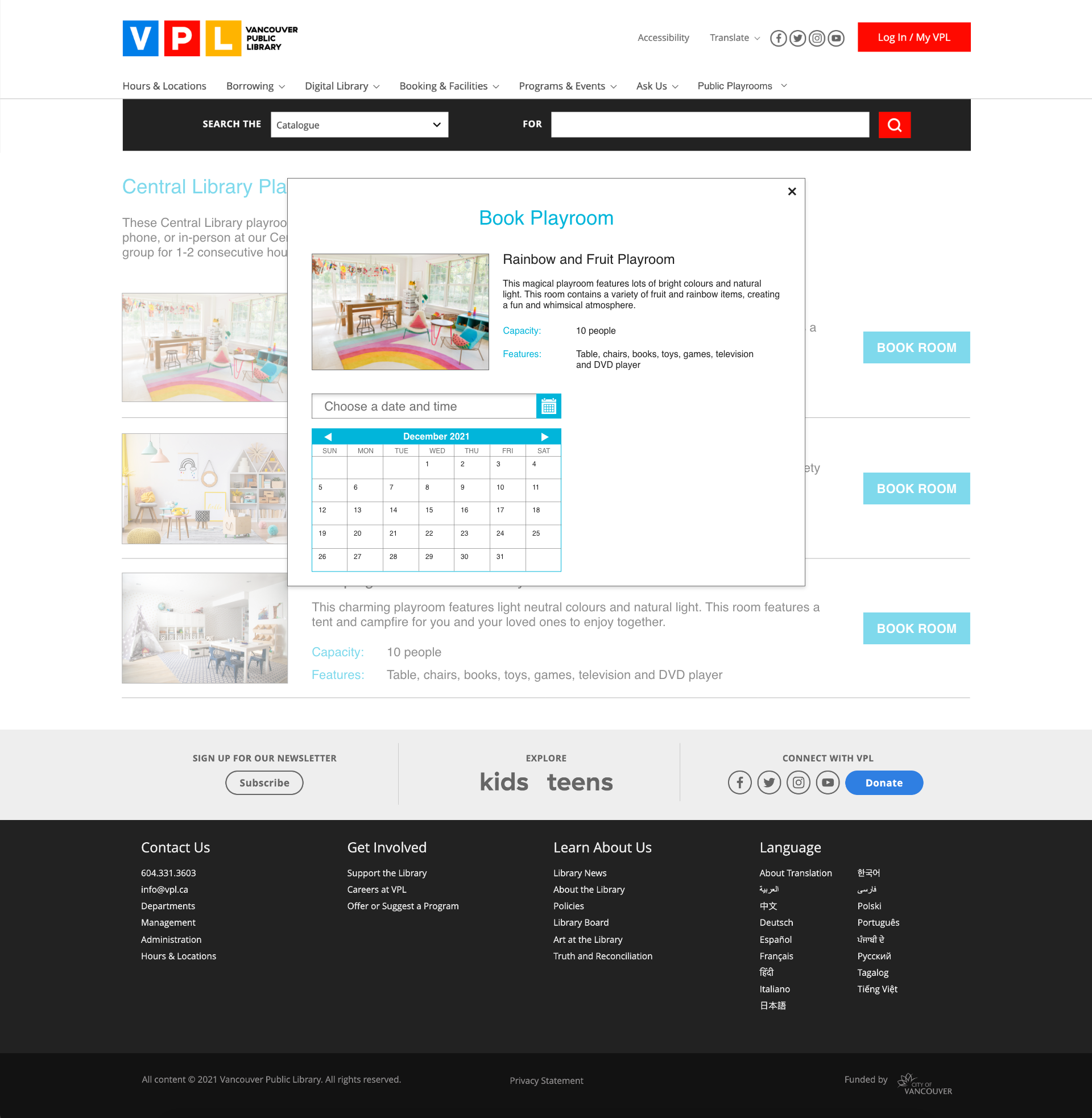
With the onset of the COVID-19 pandemic and the increasing cost of housing, finding and being able to afford a home is becoming increasingly more challenging for people.
While I understand that homelessness is greatly nuanced and that there are many factors that contribute to a person becoming homeless, it is important to try to fix the systems we can, and create more easily accessible public services that can help address some of these factors, and help support people when they need it the most.

.png)