
We were tasked with co-designing a creative piece showcasing the life experiences of the 3 Shorncliffe residents we were paired with. Each of our residents had varying levels of memory impairment or dementia. As a group, we met with our residents over 6 virtual visits to share stories, co-design the piece together, and gather feedback about how to design the piece.
My group members and I wanted to create a final project that could help our residents to connect with more people and help facilitate storytelling and conversations with others.
Additionally, we wanted to create something to help give our residents agency and help them to feel more independent, while living in their care home environment.
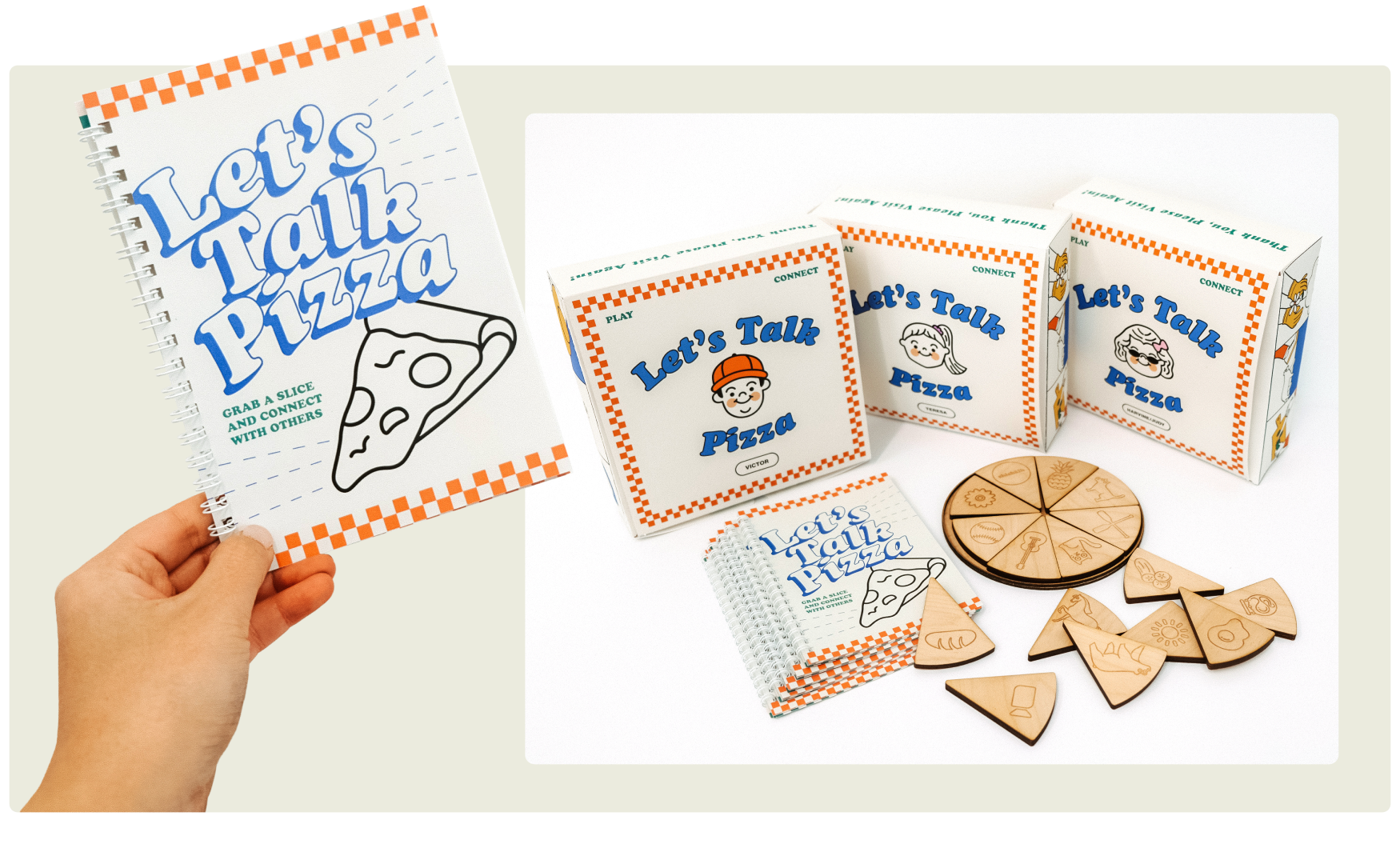
A pizza board game that celebrates the residents' life experiences, and can be used to help them connect with others through creativity and storytelling.
.png)


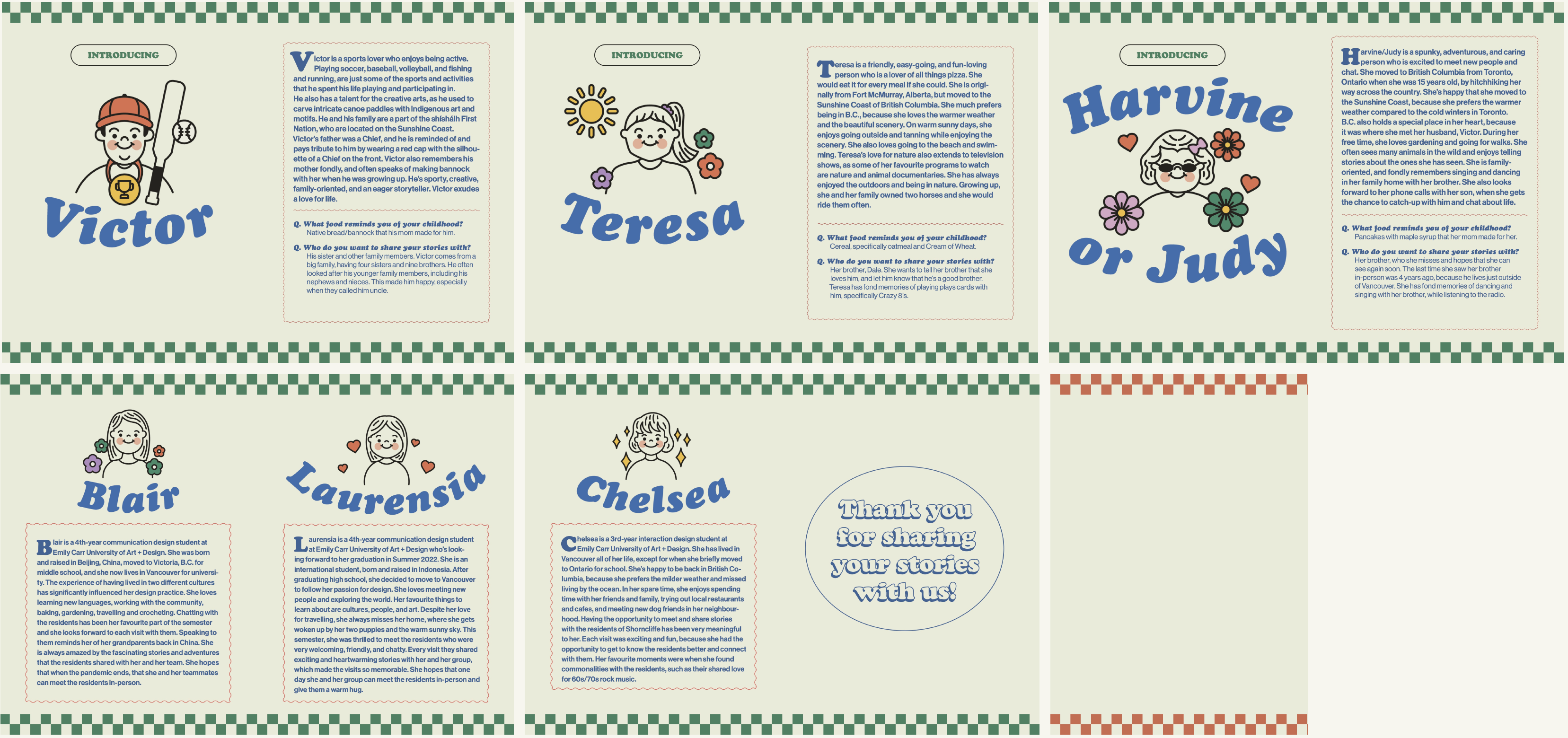
These are the residents' introduction pages that are in the menu booklet.

This stage of the project was focused on getting to know the residents and having them get to know us.
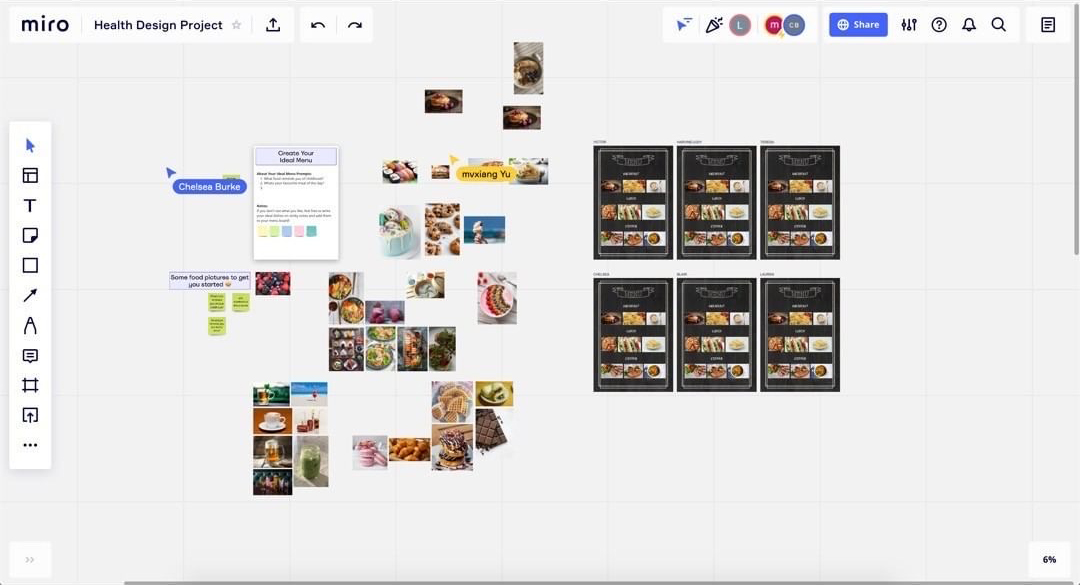
During one of our early visits my group members and I prepared a "Choose your Ideal Menu" activity using Miro, which we screen-shared over Zoom. I brought the idea of having everyone create their ideal menu boards to my group mates, because I thought it would provide a variety of jumping off points to dive into deeper discussions and stories.
During the activity, we asked everyone in our group to choose from a set of provided options what they would want to have for breakfast, lunch, and dinner. Group members also had the option to suggest another option if they didn't like any of those provided.

During this project, I took the lead on facilitating our group discussions. I found that the best strategies for interacting with the residents were:
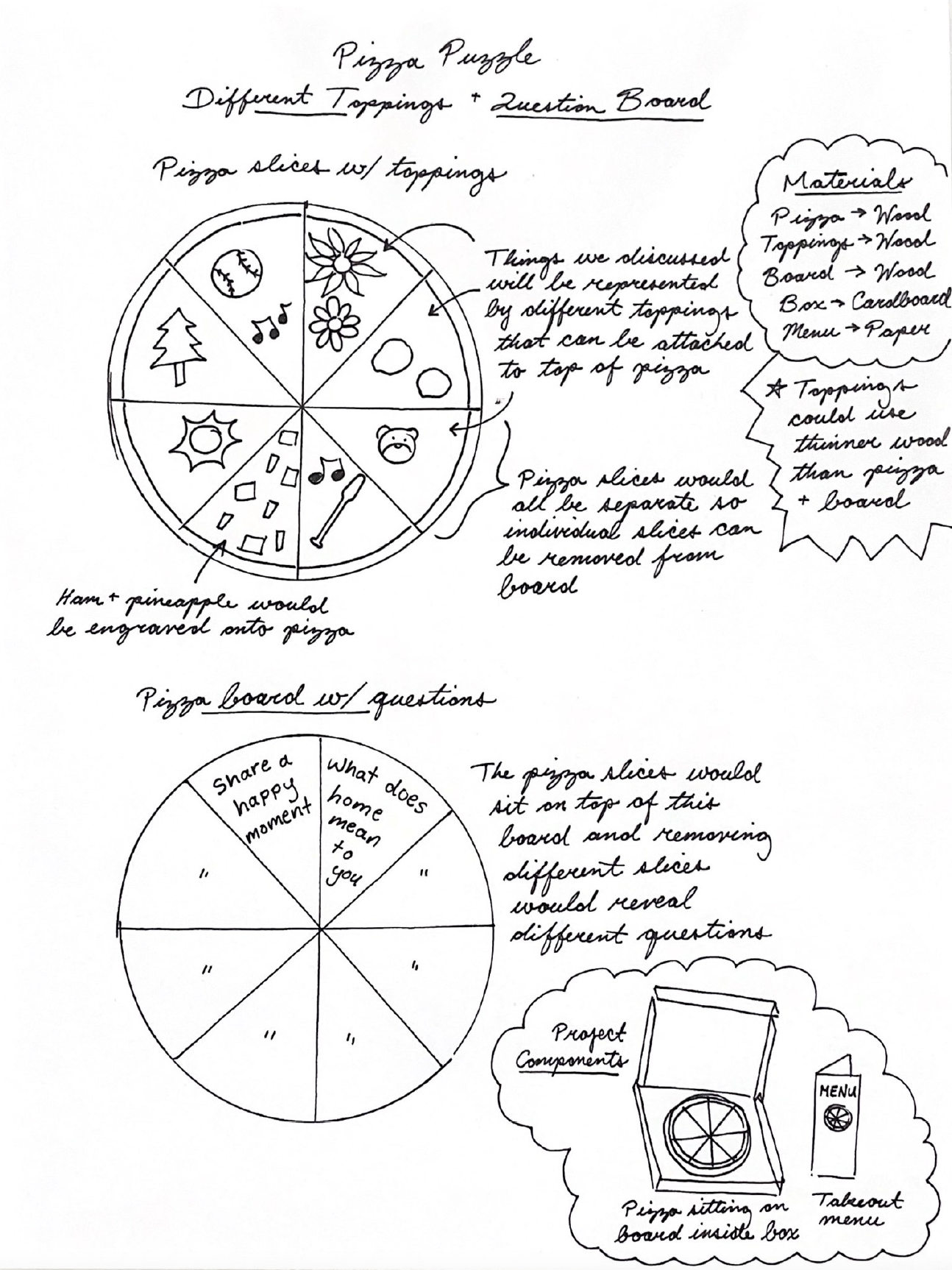
Once our content was collected we began to brainstorm potential project ideas that we could propose to our residents. The image above shows our brainstorming Miro board, and below are sketches I did to initially propose how the pizza game could potentially look and function.

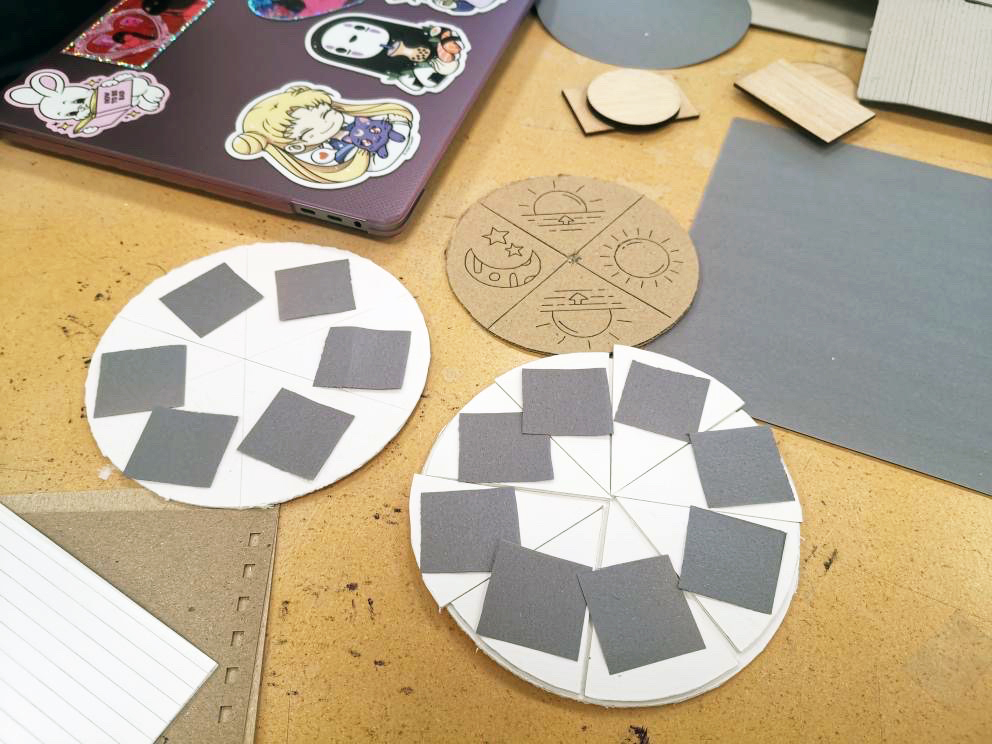
This stage of the project was focused on producing prototypes, consulting the residents on the development of our final outcome, and producing and sharing the outcome with the residents.
We chose to move forward with our pizza game idea, but it adapted and changed from our first prototype. Originally, we planned to create toppings that they could be attached and removed from the pizza slices, so each resident could customize their pizza.
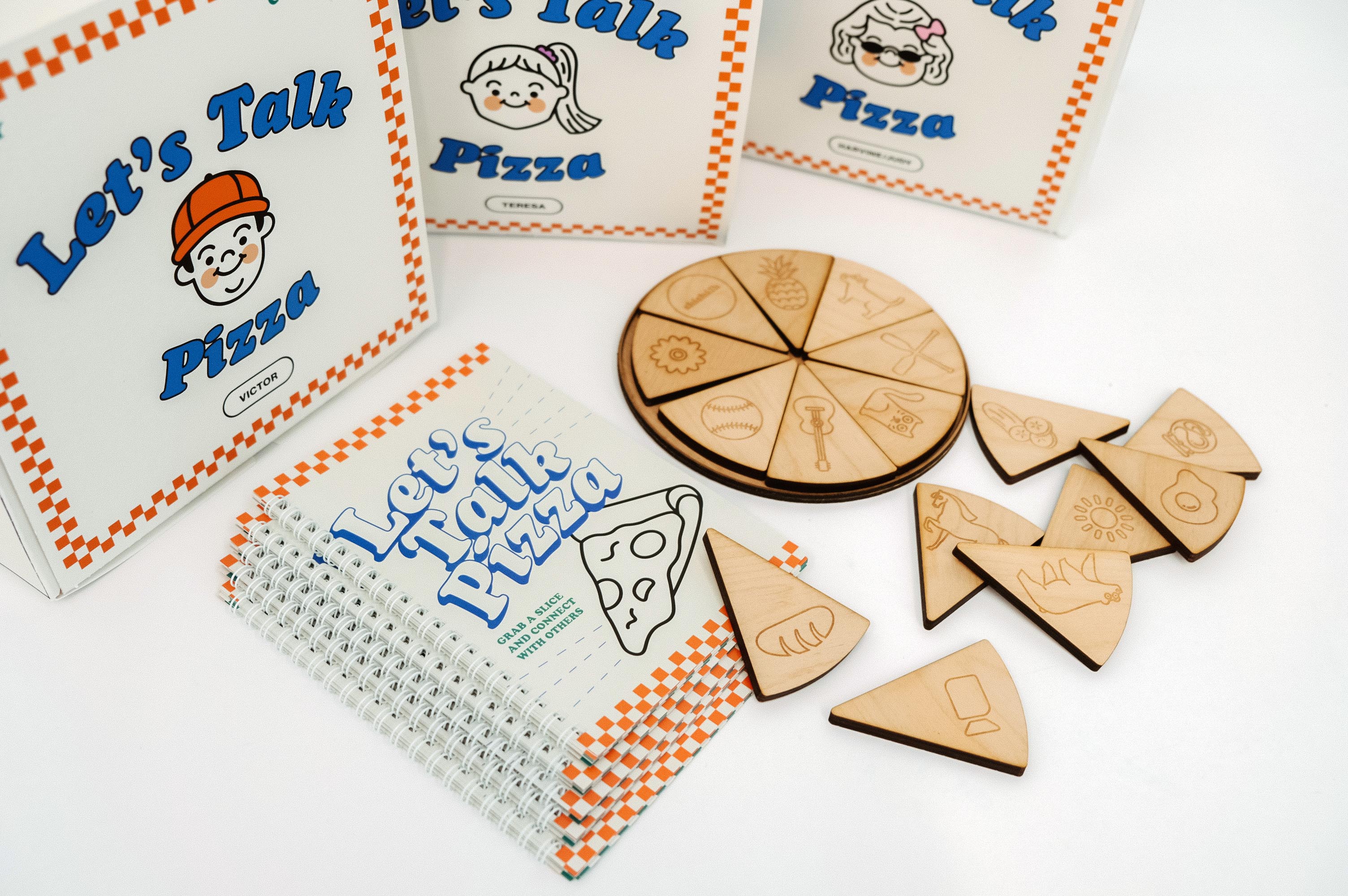
The final version of the game includes a pizza board, pizza slices with different toppings engraved on each piece, a menu booklet, and a pizza box. The pizza slices and pizza board were laser cut out of birch plywood (facilitated by me), and the boxes and menu booklets were printed and assembled by Blair (menu booklet) and Laurensia (pizza boxes).
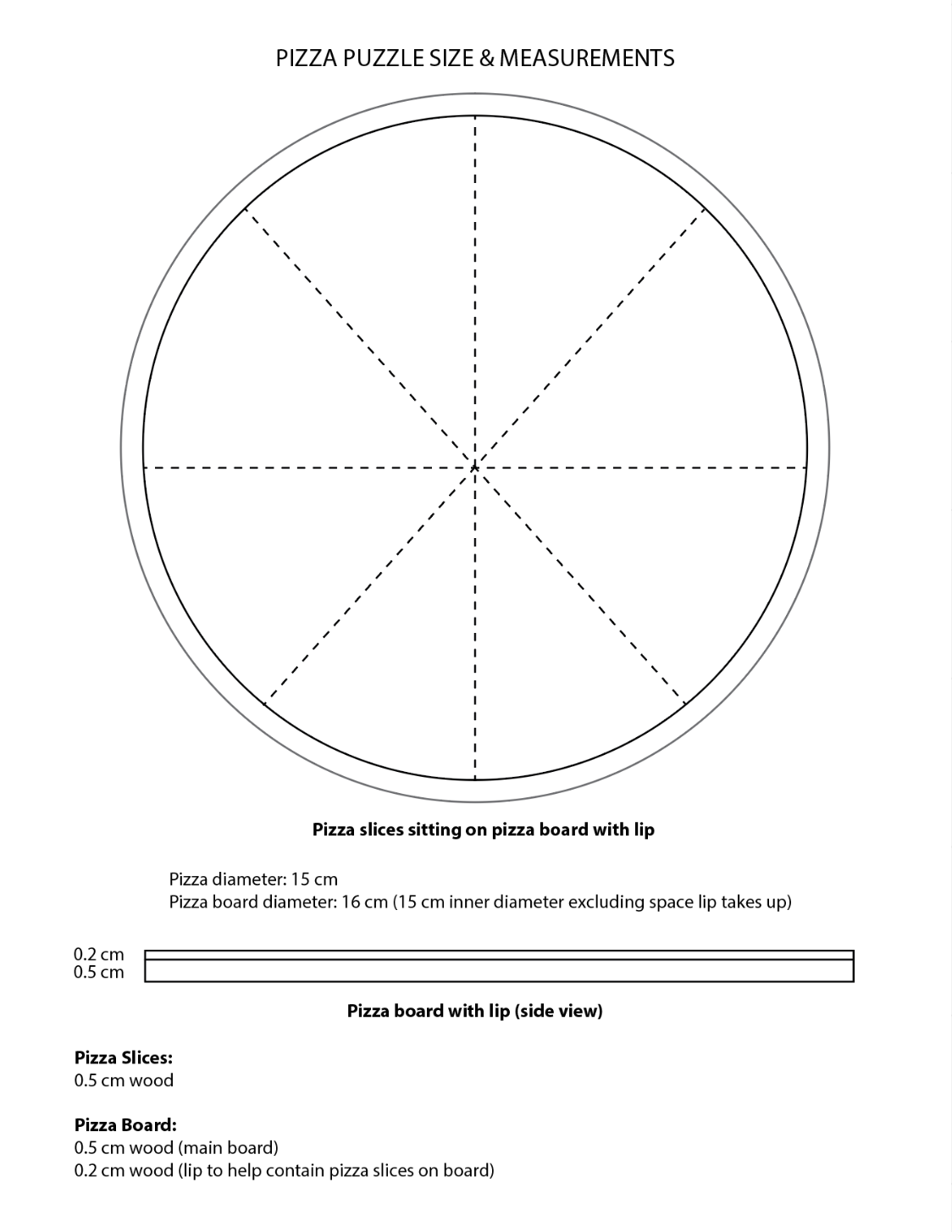
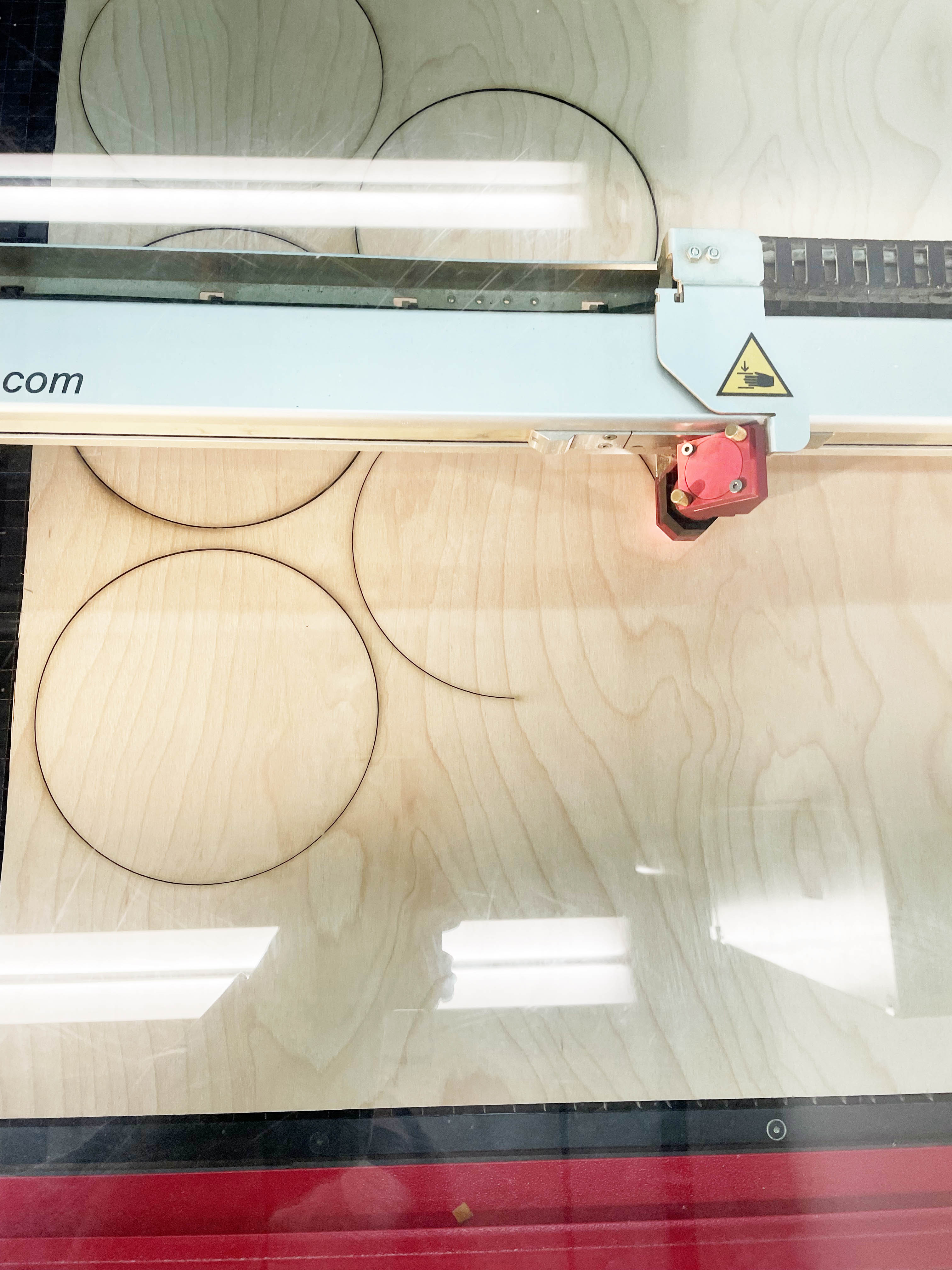
The residents were consulted throughout the process and were all excited about the pizza theme of the game.

The resident's stories shared during the group discussions were narrowed down and distilled into 16 toppings. The imagery of the toppings correspond to a specific story or fact about the resident(s), and are used to pose questions to other players during gameplay.
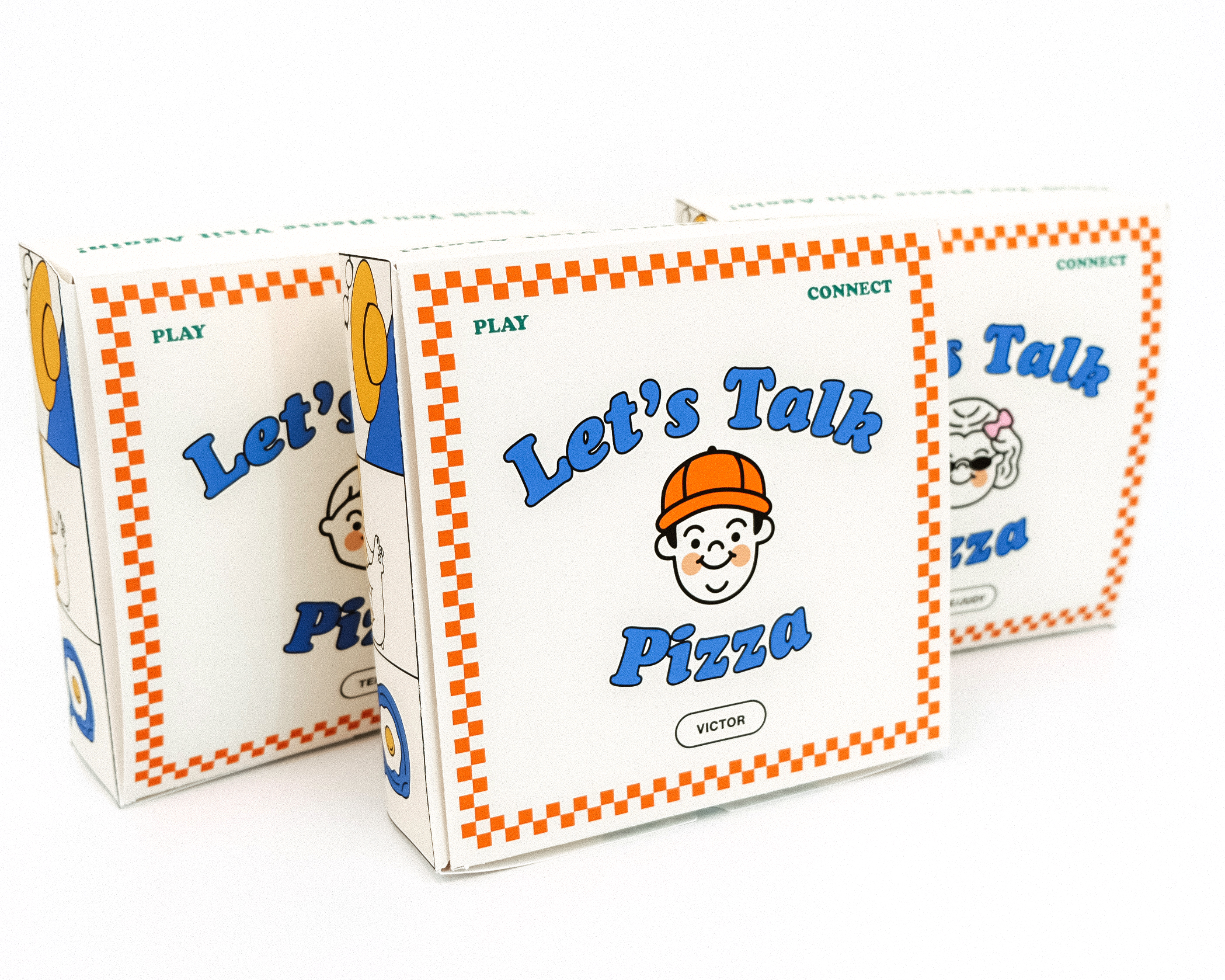

The cover of the box is personalized for each group member with an illustrated portrait of the group member it belongs to. The sides of the box feature illustrations depicting some of the residents' stories.
The instructions for the game can be viewed inside the box on the lid.
The dimensions of the box are 8" x 8" x 2.5".

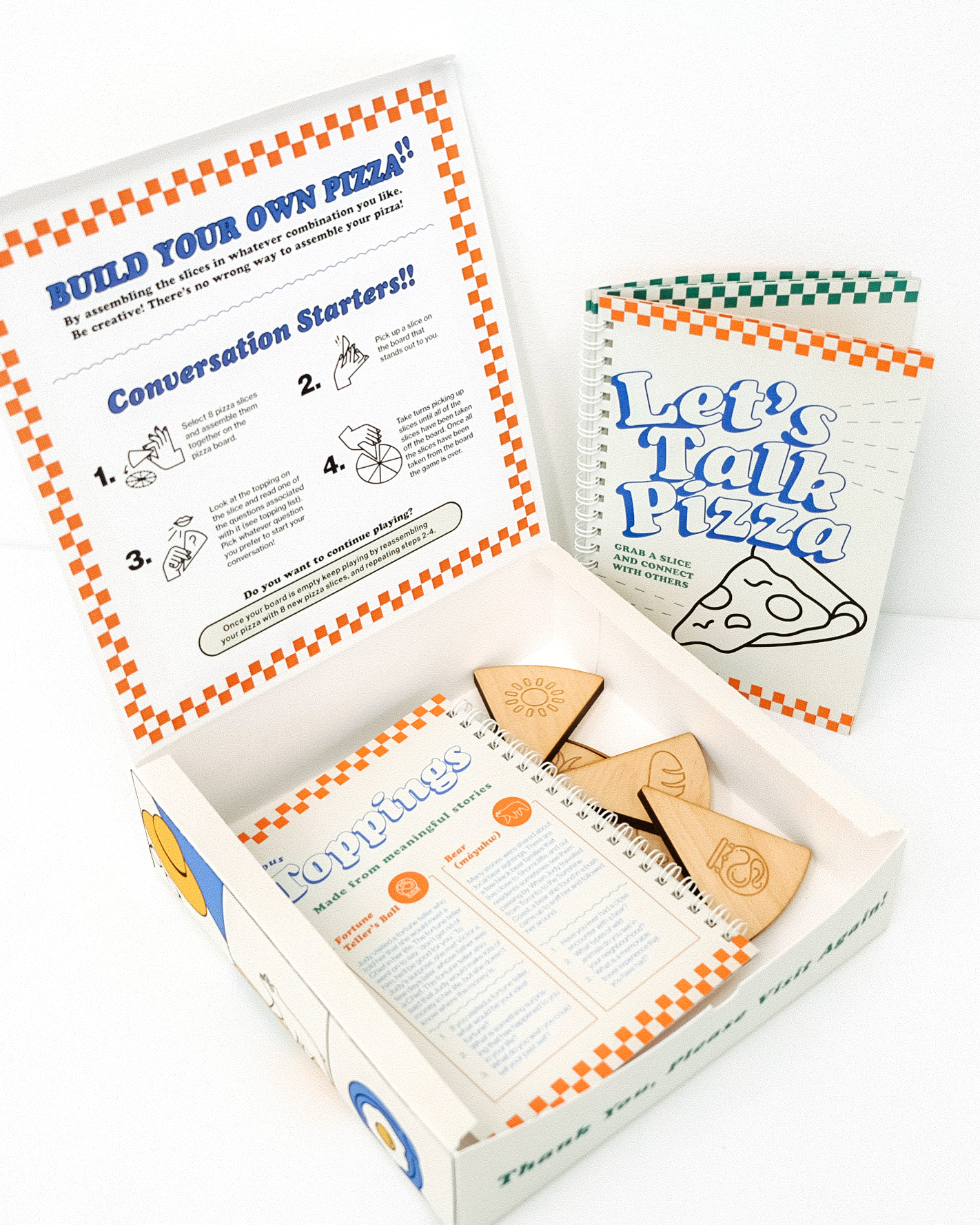
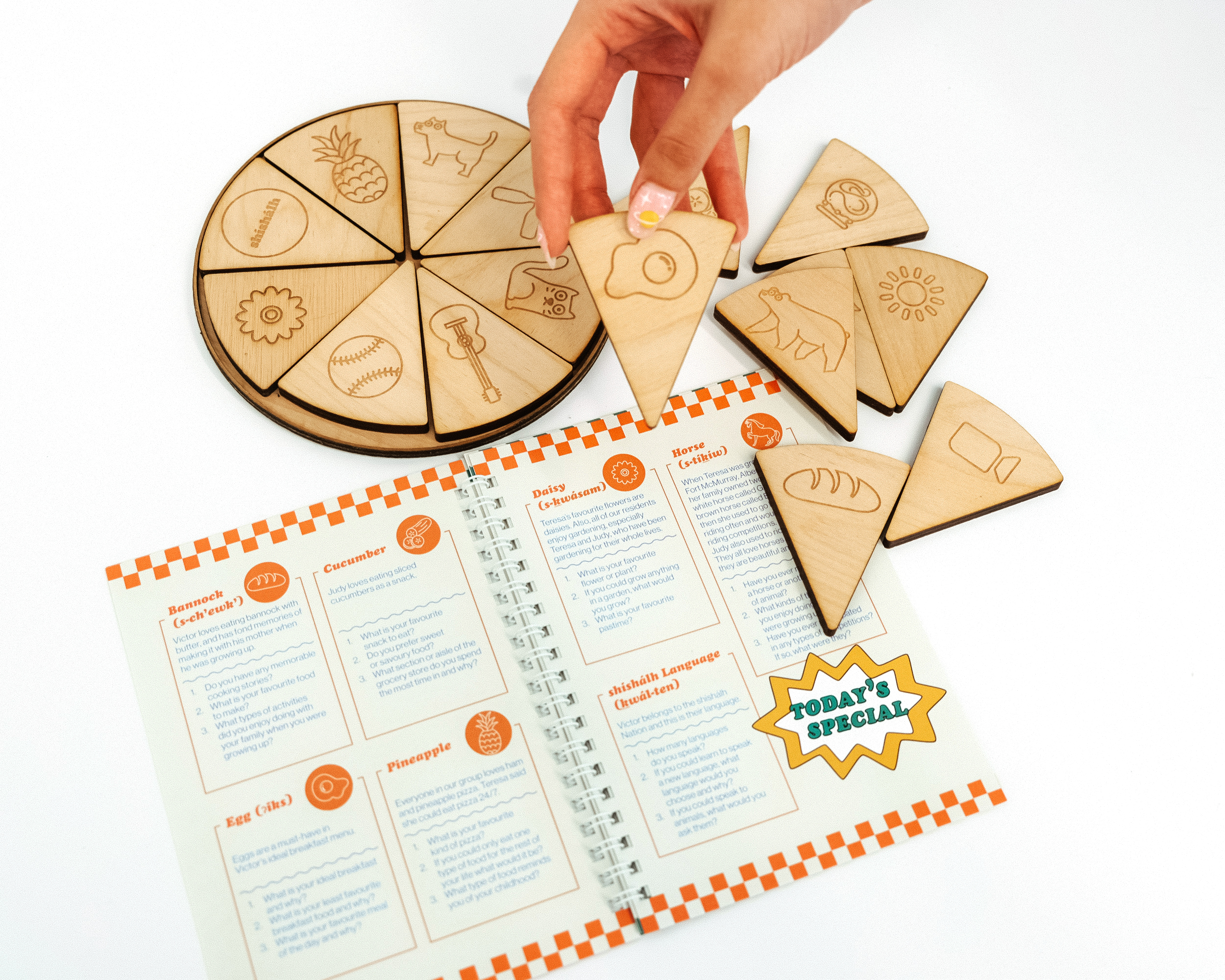
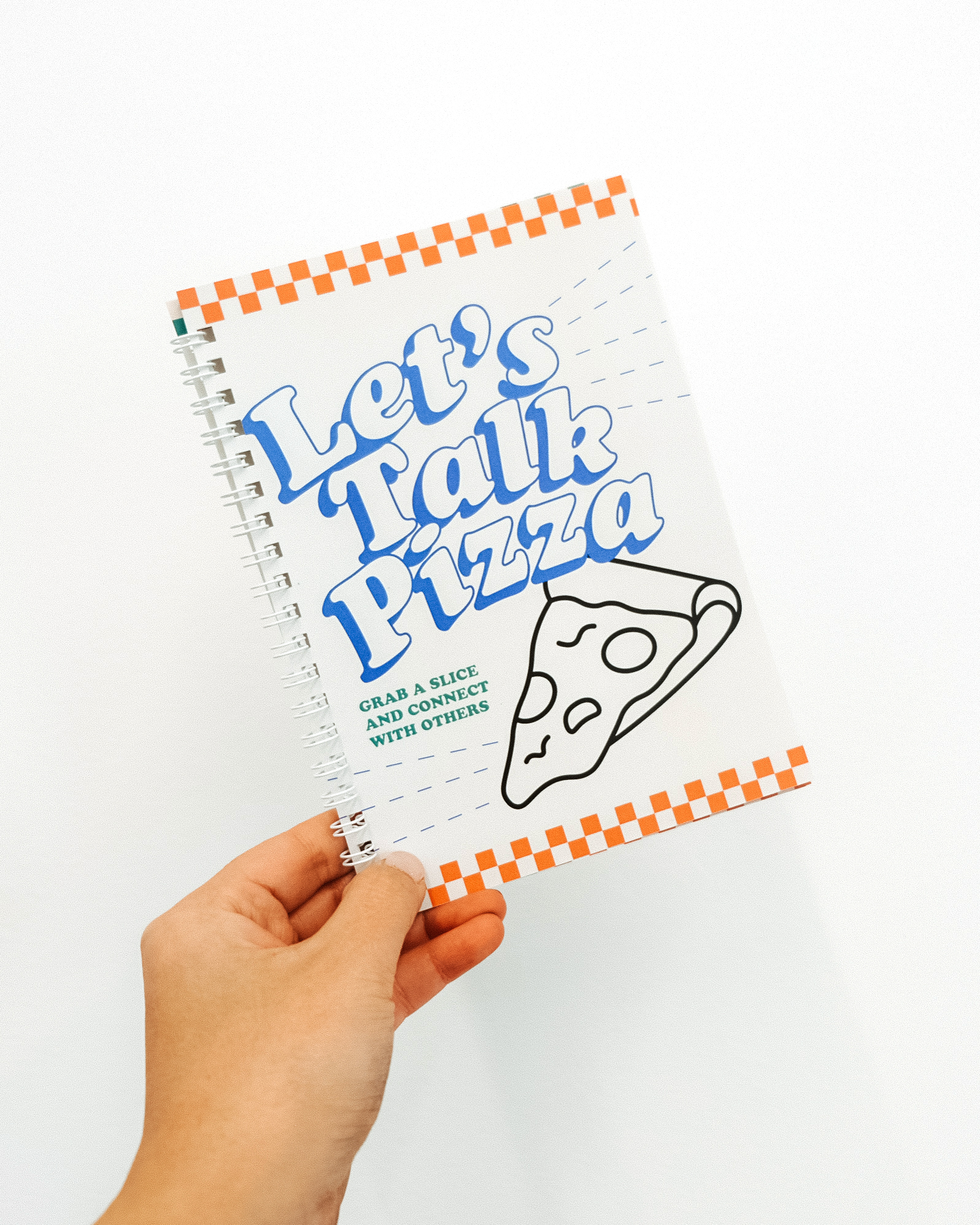
The booklets include an introduction to the project, pizza topping descriptions and accompanying stories, and an introduction for each group member (students and residents). The meaning behind each pizza topping is explained here along with a list of questions that are used to play the game.
By reading these booklets, the reader can start getting to know our residents through some of their stories.
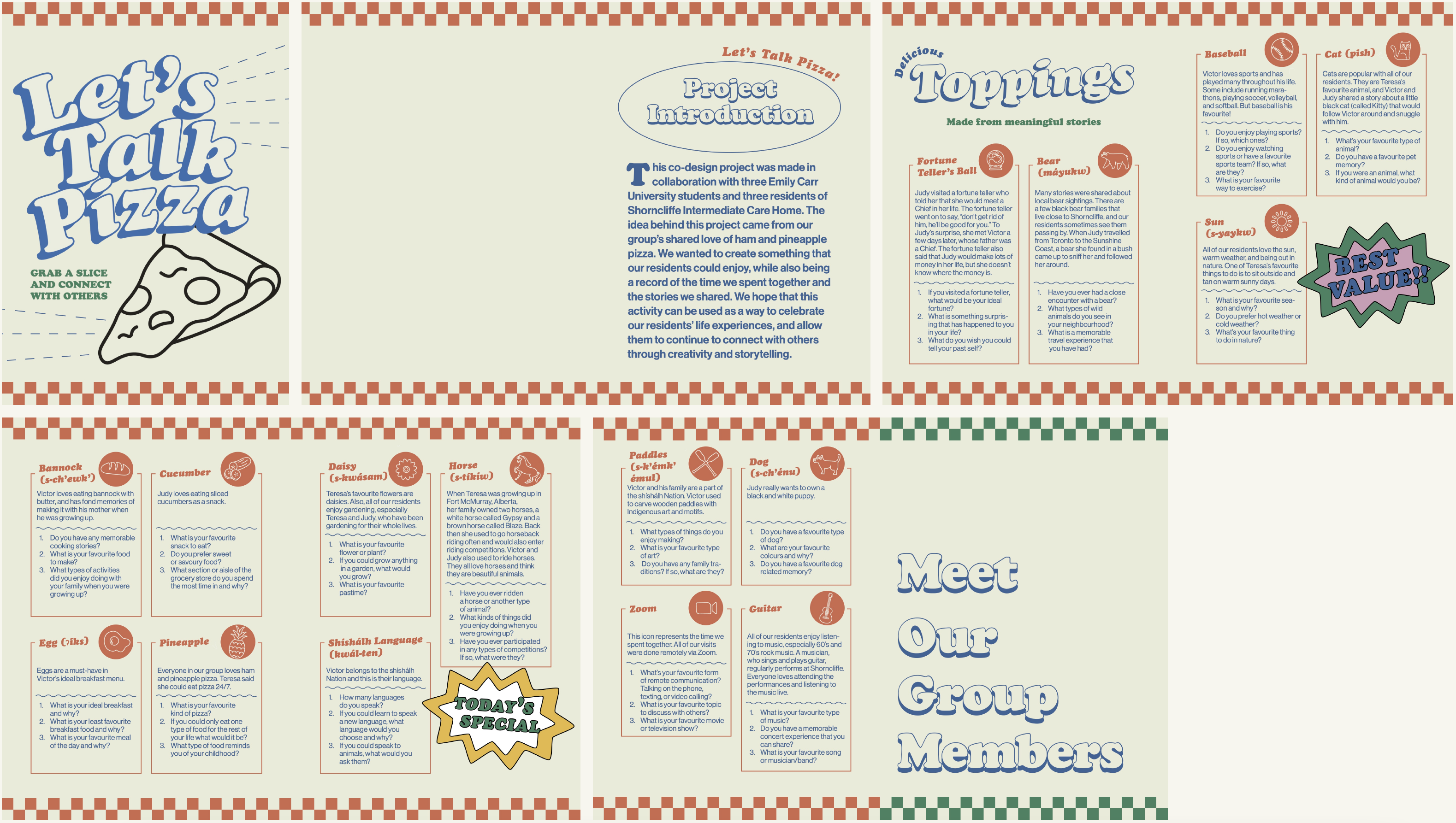
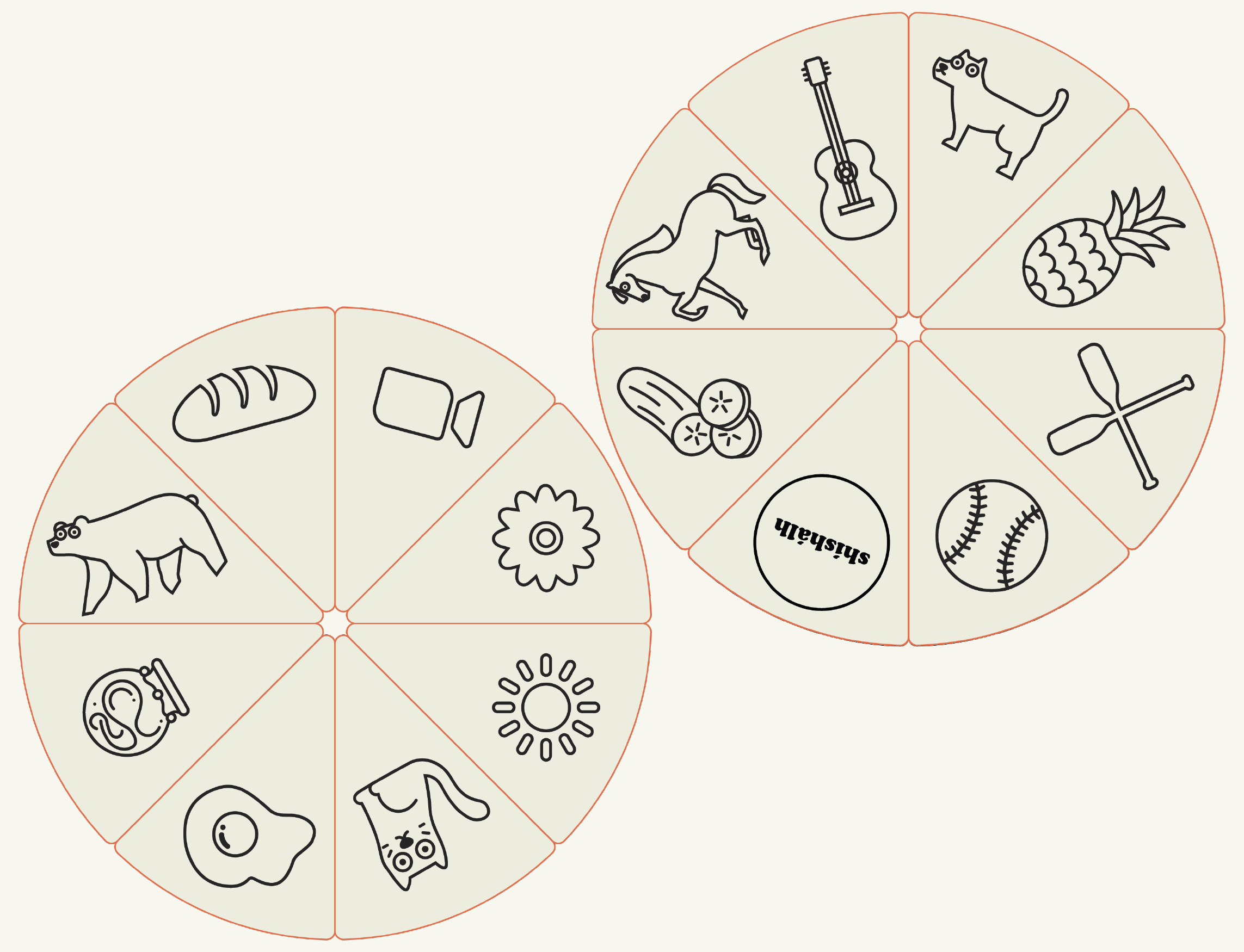
The resident's stories shared during the group discussions were narrowed down and distilled into 16 toppings. The imagery of the toppings correspond to a specific story or fact about the resident(s), and are used to pose questions to other players during gameplay.
Increasing tactility was important for us, because one of our residents has a vision impairment. Using wood allowed us to create a more tactile and engaging gameplay experience for all of our residents.
Conducting visits remotely can come with challenges, but it also presents many opportunities. Additionally, flexibility and adaptability are necessary for successful co-design work.
By supporting people and creating an environment that facilitates engagement and participation, designers have the opportunity to amplify the voices of people with lived experience and help them to shape community and health initiatives that directly affect them.

.png)